Pasta e Fagioli Recipe
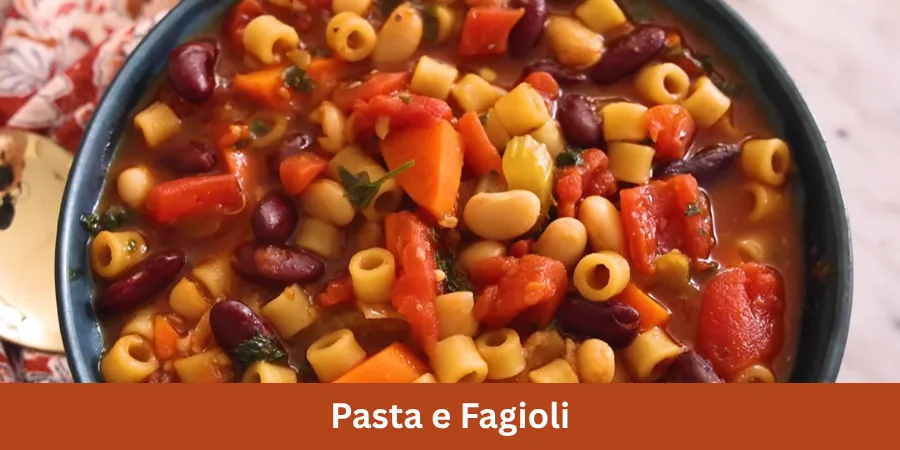
Pasta e Fagioli is a classic Italian comfort food made with beans, small pasta, tomatoes, and a rich broth. It is a hearty and nourishing soup that works well for a busy weeknight or a relaxed weekend meal.
I like using canned white beans because they give excellent results and make the preparation more practical. A portion of the bean and tomato mixture is pureed to create a creamy, stew-like texture while keeping some whole beans for contrast.
Pasta e Fagioli Recipe-The Short Answer
The pasta cooks directly in the broth and releases starch that helps create a naturally creamy and velvety texture without adding cream. This traditional approach brings the simple beans, tomatoes, and pasta together while keeping the soup substantial rather than overly thick.
The recipe is easy to make on the stove, and the controlled partial puree gives the finished soup body while keeping the pasta and whole beans clearly defined.
About This Recipe
I like Pasta e Fagioli because the name simply means pasta and beans, which describes the heart of this Italian dish. It is a rustic soup made with beans, small pasta, and a flavorful broth.
The base gets its depth from sautéed aromatic vegetables, pancetta, herbs, and chicken stock. I find that tiny tubular pasta shapes work especially well because they cook into the broth and give each spoonful a satisfying balance of pasta and beans.
There is no single authentic or true formula that every Italian family follows. Different regions of Italy have their own recipes, with some versions using tomatoes while others may include borlotti beans or meat.
A nonna, or grandma, may prepare the dish in a certain way based on family tradition. It can range from thick and hearty like a stew to thinner and more soup-like.
The dish has roots as a humble peasant dish built around inexpensive ingredients, which helps explain why so many variations exist.
You may also hear the name pasta fagioli, pasta fasule, or pasta fazool depending on the region and family tradition.
Whether made vegetarian or with meat, it remains a comforting and delicious meal. The name pasta fagioli soup is also commonly used in English, and if you are wondering how to pronounce it, the different regional names are one reason you may hear several versions.
Ingredients Needed
150 g yellow onion, finely diced
100 g carrots, finely diced
75 g green bell pepper, finely diced
20 g garlic, minced
85 g / 3 oz pancetta, finely diced
1 bay leaf
1 tsp fresh rosemary, finely chopped
1 tsp fresh thyme, finely chopped
0.5 g crushed red pepper flakes
411 g / 14.5 oz whole peeled tomatoes with their juice
840 ml low-sodium chicken broth
480 g drained cannellini beans
227 g / 8 oz small ditalini or tubetti pasta
30 ml / 2 tbsp extra virgin olive oil for cooking
5 ml / 1 tsp extra virgin olive oil for finishing
4 g kosher salt
1 g black pepper
50 g freshly grated Parmesan cheese
8 g fresh parsley, chopped
Ingredients Notes
The flavor of this Pasta e Fagioli starts with onion, carrots, green bell pepper, and garlic. I like to keep the vegetables finely chopped so they soften evenly and create a flavorful base layer.
Use 150 g yellow onion, 100 g carrots, 75 g green bell pepper, and 20 g garlic. The onion, carrots, and green bell pepper should be finely diced, while the garlic should be minced.
This combination creates the aromatic foundation without overpowering the beans and pasta.
Pancetta gives the soup a savory backbone. This Italian bacon is made from pork belly and is commonly used in Italian cooking for its rich savory flavor.
Use 85 g / 3 oz pancetta, finely diced.
Add 1 bay leaf, 1 teaspoon fresh rosemary, 1 teaspoon fresh thyme, and 0.5 g crushed red pepper flakes.
These quantities keep the herbs noticeable without making the soup overly spicy or herb-heavy.
For the tomato and broth base, use 411 g / 14.5 oz whole peeled tomatoes with their juice and 840 ml low-sodium chicken broth.
Do not drain the tomatoes because their juice is included in the measured weight and liquid calculation.
The broth is divided into 600 ml for the initial cooking, 120 ml for the first pasta adjustment, and 120 ml for the second adjustment.
The main ingredients are 480 g drained cannellini beans and 227 g / 8 oz small ditalini or tubetti pasta.
The beans are approximately 2 × 15 oz cans after draining.
Together, these quantities give a 2.11:1 bean-to-pasta ratio, keeping the beans as the dominant ingredient while providing enough pasta for a hearty soup.
Use 30 ml / 2 tbsp extra virgin olive oil for cooking and 5 ml / 1 tsp extra virgin olive oil for finishing, giving 35 ml total.
Season with 4 g kosher salt and 1 g black pepper.
Finish with 50 g freshly grated Parmesan cheese and 8 g fresh parsley, chopped.
Pecorino Romano can replace the Parmesan at the same weight.
The initial salt is kept at 4 g because pancetta and Parmesan also contribute sodium. Check the final seasoning after adding the cheese.
How to Make Pasta e Fagioli
Making Pasta e Fagioli is simple when the ingredients are prepared before cooking. Start with a large heavy pot or Dutch oven over medium heat and add 30 ml olive oil.
Add the onion, carrots, and green bell pepper, then sauté for 5–6 minutes, stirring occasionally, until the vegetables are softened and the onion becomes translucent.
Add 85 g pancetta and cook for another 5–6 minutes, allowing the fat to render and the pancetta to become lightly browned.
Stir in the minced garlic, rosemary, thyme, and crushed red pepper flakes, then cook for 30–45 seconds until fragrant. The garlic should not brown or burn because it can make the finished soup bitter.
Add 411 g whole peeled tomatoes with their juice, 480 g drained cannellini beans, 1 bay leaf, 4 g kosher salt, 1 g black pepper, and 600 ml low-sodium chicken broth.
Stir everything together and bring the mixture to a gentle simmer.
Cook uncovered for 8 minutes, stirring as needed and checking the bottom of the pot so nothing sticks.
Remove and discard the bay leaf before moving to the next stage.
Keeping the tomato juice in the pot is important because the recipe uses the full tomato weight, including the liquid, as part of the intended balance.
To build the creamy texture, transfer approximately 350 g of the bean and tomato mixture to a heatproof bowl.
Blend it with an immersion blender until mostly smooth, then return the puree to the pot while leaving plenty of whole beans visible.
This partial puree creates body and a creamy texture while keeping the beans clearly defined.
Bring the soup back to a gentle simmer and add 227 g dry pasta directly to the pot.
Stir well so the pasta cooks evenly.
After about 4 minutes, add 120 ml hot chicken broth, then add another 120 ml hot chicken broth after approximately 3–4 minutes.
Continue cooking for about 9–11 minutes total, depending slightly on the pasta brand and shape, until the pasta reaches al dente.
Adding the broth in stages allows the pasta starch to release gradually, creating the thick creamy consistency that makes Pasta e Fagioli different from a thin broth-based soup.
Once the pasta is al dente and the soup is thick but still spoonable, reduce the heat.
Stir in 50 g freshly grated Parmesan cheese.
Add 8 g fresh parsley and 5 ml olive oil, then taste before making any final salt adjustment.
The Parmesan and pancetta already contribute salt, so the initial 4 g should not automatically be increased.
Ladle the soup into bowls and finish with fresh parsley, freshly ground black pepper, or a small drizzle of olive oil if desired.
Serve immediately with crusty bread.
The pasta will continue absorbing liquid as it sits, so the soup naturally becomes thicker over time.
Serving it right away helps preserve the creamy texture, visible beans, and properly cooked pasta.
Pasta e Fagioli vs Minestrone
When comparing Pasta e Fagioli with minestrone soup, the main difference is how the ingredients are used.
Both soups contain vegetables, beans, and pasta, but they have a different structure. Pasta e Fagioli is a pasta and bean soup with a thick, hearty broth, while the vegetables are finely chopped and cooked into the base rather than served as large pieces.
In my experience, the texture makes the distinction easy to notice. The finely chopped vegetables are cooked as sautéed vegetables to build the flavor base, adding depth without overpowering the beans and pasta.
The partial puree also gives the soup body while allowing whole beans and pasta to remain visible.
Minestrone soup, on the other hand, is often made with colorful chunky vegetables, along with beans and pasta in a thinner tomato broth.
These differences make the two Italian soups distinct despite their similar ingredients.
Pasta e Fagioli focuses more on the beans, pasta, and thickened texture, while minestrone allows its vegetables to remain more noticeable.
The tomato broth gives minestrone its recognizable tomato-based character, whereas the sautéed vegetables and flavor base in Pasta e Fagioli support the beans and pasta without turning it into a vegetable-heavy soup.
Advance Prep
For easier storage, keep the soup separate from the pasta.
Pasta e Fagioli can keep well for three days in a tightly covered container in the fridge or refrigerator.
The pasta continues to absorb liquid during storage, so keeping it separate helps maintain its texture and prevents soggy pasta.
For the best pasta texture, prepare the cooked pasta fresh when you are ready for serving.
For reheating, heat the soup gently until heated through, then add fresh pasta before serving.
If using fresh pasta for reheated soup, boil it separately and add it when ready.
This keeps the pasta from becoming too soft and helps maintain a better texture in leftover soup.
For freezing, freeze the soup without the pasta for up to three months.
Store the frozen soup in the freezer, then defrost it before reheating.
Once defrosted, heat the soup until warmed through and add fresh pasta before serving.
This approach keeps the pasta from being frozen and reheated with the soup, which helps protect its texture.
Variations To Try
You can change the recipe without disturbing its main balance.
For a vegetarian version, remove 85 g pancetta and use vegetable broth in its place.
If you prefer a different type of bean, replace 480 g cannellini beans with 480 g drained borlotti beans and keep the pasta at 227 g.
For a lighter green variation, add 60 g baby spinach during the final 2 minutes of cooking without changing the amount of pasta.
To make the soup spicier, increase the red pepper flakes from 0.5 g to 1 g while leaving the other quantities unchanged.
You can also add an extra 4 g fresh parsley when serving.
I would keep the rosemary and thyme at their original amounts because increasing them substantially can make their flavors too dominant.
Serving Pasta e Fagioli
Pasta e Fagioli works well as a main course served in a big bowl, while a smaller bowl makes a good starter course for an Italian dinner.
This hearty and satisfying dish has plenty of flavor on its own, so a simple garnish is enough.
Finish the bowls with parsley, fresh herbs, cracked black pepper, or freshly grated Pecorino Romano or Parmesan cheese.
A little grated cheese can also add extra flavor without overpowering the soup.
For a simple dinner pairing, serve Pasta e Fagioli soup with an Italian tricolore salad and lemon vinaigrette.
Good crusty bread makes a useful accompaniment, especially when you have a big piece to soak up the remaining broth and delicious bits.
The soup should have a thick but spoonable consistency, with the beans visible and the pasta clearly defined.
If you prefer it soupier, add more broth after cooking or prepare the pasta in a separate pot when serving later.
You can also enjoy it with a simple salad, honey mustard chicken salad, or chicken salad for a fuller meal.
Grated Parmesan cheese, bread, and herbs make easy finishing options, while the cooking method can affect the final texture.
When I cook this soup, I prefer to serve it while the pasta is still al dente and finish it with Parmesan, parsley, black pepper, and olive oil.
What Can Go Wrong
When cooking the pasta, add the hot broth gradually instead of pouring it all in at once.
Give the first addition time to absorb before adding more.
This makes it easier to control the soup’s consistency and keeps it from becoming too thin.
Taste the pasta as it cooks and avoid letting it overcook.
It should be al dente when you finish cooking because it will continue to absorb liquid as the soup rests.
As the pasta cooks, stir it frequently to keep it moving through the thick bean and tomato base.
This helps prevent sticking and reduces the chance of it sticking to the bottom of the pot.
Gentle stirring also helps the pasta cook evenly without breaking it apart.
Storage
Storing
When preparing ahead, I find it works best to prepare the soup from step 2 through step 6, then chill it before adding the pasta.
Pasta e Fagioli will keep well for 3 days when covered and stored in the fridge.
During reheating, the pasta can absorb some of the broth and make the soup thicker.
If you prefer a thinner consistency, add more broth before serving.
Leftovers can be gently reheated in a crockpot, microwave, or on the stove.
Avoid aggressive boiling because the pasta may become mushy, although it is still edible.
Freezing
For longer storage, the soup can be frozen for up to 3 months in a sealed freezer-friendly container.
For best results, freeze the soup base without pasta since pasta can soften during freezing and reheating.
When ready to serve, reheat the base and cook pasta separately.
Add pasta just before serving to maintain a better texture.
To Reheat
For one serving, add 2–3 tablespoons of water and a drizzle of olive oil, then heat gently over medium-low heat, stirring until warmed through.
Serve hot and optionally top with crispy croutons.
If the soup has thickened after refrigeration, add a little extra liquid to bring it back to the desired consistency.
Tips
For the best soup, a little preparation makes the cooking process easier.
Get the vegetables ready ahead of time by cutting the carrots, onions, and garlic before you start.
A food processor can make chopping much faster.
Canned beans are a convenient way to save time, while dried beans can be cooked ahead and stored in a container until needed.
These simple tips and techniques help build flavor while keeping the preparation manageable.
I prefer making this dish on the stovetop because it gives better control over the pasta and liquid.
Start with less water and add more only when needed to maintain the right consistency.
As the pasta cooks, stir constantly with a wooden spoon, paying attention to the bottom of the pot to prevent sticking.
Season gradually in layers, allowing the tomatoes and beans to develop their flavor before making the final seasoning adjustment at the end.
Choose small pasta shapes that cook quickly and evenly so their size works well with the beans and gives each spoonful a balanced bite.
Good-quality olive oil also makes a noticeable difference in the finished dish.
If the soup becomes too thick, add hot water a little at a time until you reach the desired consistency.
Before serving, a final drizzle of fresh olive oil adds important flavor and richness.
It also helps maintain the soup’s creamy texture.
When reheating leftovers, add a splash of hot water or broth and a little fresh olive oil to loosen the soup as the pasta continues to absorb liquid.
The fixed recipe is designed for 6 servings, so these adjustments can be made while keeping the intended balance of the recipe.
Nutrition
Each serving provides about 446 kcal, with 58.4 g carbohydrates and 19.6 g protein.
It contains around 15.2 g fat, including 4.0 g saturated fat, along with 8.5 g fiber.
The recipe also provides about 950–1,000 mg sodium per serving.
The sodium range can vary based on the brands of broth and pancetta used and whether extra salt is added at the end.
These values are calculated from the fixed recipe quantities:
- 227 g dry pasta
- 480 g drained cannellini beans
- 411 g tomatoes with juice
- 345 g vegetables
- 85 g pancetta
- 35 ml olive oil
- 840 ml low-sodium broth
- 50 g Parmesan
- 4 g kosher salt as the base amount
The complete batch is divided into 6 equal servings, so the nutrition estimate follows the same fixed formula used for the recipe.