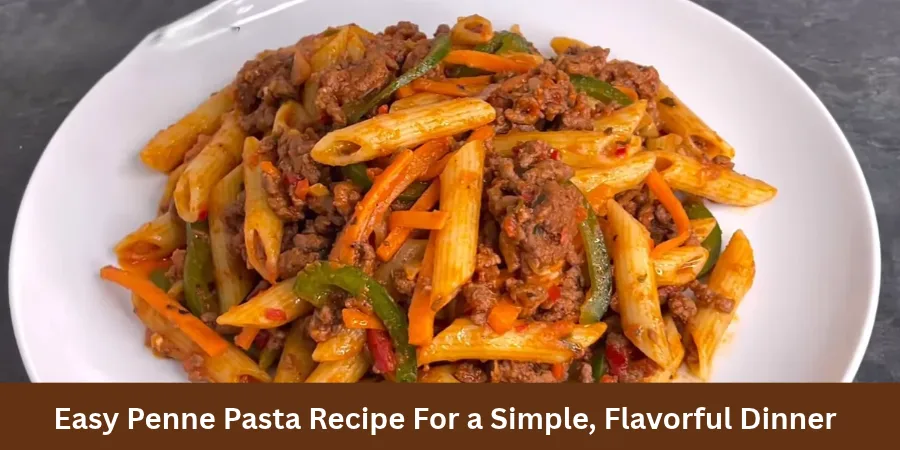
Easy Penne Pasta Recipe for a Simple, Flavorful Dinner
Penne pasta is a popular pasta shape that originated in Italy. The name penne comes from an Italian word meaning pens or quills and refers to its pointed, pen-like ends.
This tube-shaped pasta is commonly sold dried. Penne rigate has ridges along its surface that help sauces cling to the pasta. Its versatility makes it suitable for a wide range of recipes, from creamy pasta dishes to tomato-based sauces.
Easy Penne Pasta Recipe-The Short Answer
Penne works particularly well in a one-pot pasta recipe because it cooks directly in the sauce and absorbs its flavor. In this Creamy Cheesy Beef Penne Pasta, ground beef combines with onion, carrot, bell pepper, garlic, and tomatoes to create a savory base.
Heavy cream softens the tomato flavor, while Parmesan and cheddar add richness. Mozzarella melts over the top, creating a cheesy finish. Cooking everything in one pot also reduces cleanup while keeping the preparation straightforward.
This creamy penne pasta takes approximately 65–80 minutes from preparation to serving, including resting time. Although it is not a 20-minute meal, the ingredients and cooking steps are simple to follow.
Serve it as a main dish for a satisfying family dinner. For a meat-free option, use mushrooms or zucchini instead of ground beef and choose vegetarian hard cheese made with microbial rennet.
Why This Penne Pasta Recipe Works
This Creamy Cheesy Beef Penne Pasta is a comforting dinner made with ground beef, tomatoes, garlic, herbs, and cheese. These ingredients create a rich sauce with balanced flavors and a savory taste.
Start by preparing the vegetables and measuring the ingredients. Brown the beef and cook the vegetables before building the tomato sauce.
Add the dry penne and measured water, then cook the pasta directly in the sauce. This allows the pasta to absorb flavor while saving you from washing an extra pot.
Finish with heavy cream, Parmesan, and cheddar for a smooth, cheesy texture. Melt mozzarella over the top to complete the dish.
The combination of tender penne, ground beef, and creamy sauce makes this a filling meal. The beef provides protein, while the tomatoes, garlic, and herbs balance the richness of the cheese.
You can serve the pasta as it is without adding extra protein. Although preparation and cooking take approximately 65–80 minutes, the one-pot method keeps the process manageable.
Serve it hot for a comforting dinner for anyone who enjoys creamy, cheesy pasta.
History
Penne pasta originated in Italy, where pasta makers developed techniques to create its distinctive shape. In 1865, Giovanni Battista Capurro patented a machine that could cut pasta diagonally without crushing it.
The machine cut the pasta into pen shapes and helped create the neat, angled ends that distinguish penne from other pasta shapes.
This change in production methods reflects the development of Italian pasta-making traditions over time.
What Does Penne Mean?
Penne is an Italian pasta name derived from the word for “pen.” Its shape resembles a quill pen, a traditional writing instrument that was dipped in ink.
This resemblance explains the origin of the name and helps distinguish penne from other types of Italian pasta. Penne is a tube-shaped pasta with a distinctive shape that is easy to recognize.
The ends of penne pasta are cut diagonally, creating angled openings that resemble the pointed tip of a quill. These slanted ends give penne its familiar appearance.
Penne rigate also has ridges along its surface that help sauce cling to the pasta. This makes it a practical choice for creamy, cheesy, and tomato-based sauces.
Ingredients Needed
Olive oil — 15 ml (1 tablespoon)
Lean ground beef — 454 g (1 pound)
Yellow onion — 150 g, finely diced
Carrot — 120 g, finely diced
Red bell pepper — 120 g, chopped
Garlic — 20 g, minced
Crushed tomatoes — 794 g (28 oz)
Fire-roasted diced tomatoes — 1 can (425 g / 15 oz), drained
Tomato paste — 16 g (1 tablespoon)
Sugar — 6 g (1½ teaspoons)
Dried basil — 1½ teaspoons
Dried oregano — ½ teaspoon
Dried parsley — ½ teaspoon
Red pepper flakes — 1 g (½ teaspoon)
Black pepper — 1 g (½ teaspoon)
Salt — 6 g total (3 g with the beef + 3 g with the water)
Dry penne rigate — 340 g (12 oz)
Water — 590 ml (2½ US cups)
Heavy cream — 120 ml (½ cup)
Freshly grated Parmesan — 50 g
Sharp cheddar — 56 g
Low-moisture mozzarella — 112 g, shredded
Ingredients Notes
Olive Oil: Olive oil helps brown the beef and cook the vegetables. It also helps build the savory flavor base for the sauce.
Lean Ground Beef: Ground beef provides protein and a rich, savory flavor. Breaking it into small pieces while browning helps it cook evenly and combine with the sauce.
Yellow Onion: Finely diced onion adds sweetness and depth. Smaller pieces soften more evenly and blend into the sauce.
Carrot: Carrot adds natural sweetness and balances the acidity of the tomatoes. Finely dicing it helps the pieces soften during cooking.
Red Bell Pepper: Red bell pepper adds sweetness, color, and texture. Chop it into small pieces so it cooks evenly with the other vegetables.
Garlic: Minced garlic gives the sauce a savory aroma. Add it after the other vegetables have started softening and cook it briefly to avoid burning.
Crushed Tomatoes: Crushed tomatoes form the main sauce base and provide moisture for cooking the penne. Their acidity is balanced by the cream and the small amount of sugar.
Fire-Roasted Diced Tomatoes: These tomatoes add texture and a subtle smoky flavor. Drain them as specified in the recipe to help maintain the intended sauce consistency.
Tomato Paste: Tomato paste deepens the tomato flavor. Cooking it briefly before adding the tomatoes helps develop its flavor.
Sugar: Sugar balances the acidity of the tomatoes without making the sauce noticeably sweet. The amount can be adjusted slightly according to the acidity of the tomatoes.
Dried Basil: Dried basil adds a sweet, herbal note that complements the tomato sauce.
Dried Oregano: Oregano contributes an earthy, aromatic flavor that works well with the beef and tomatoes.
Dried Parsley: Dried parsley adds a mild herbal note and complements the other seasonings.
Red Pepper Flakes: Red pepper flakes add gentle heat. Keep the specified amount for a balanced flavor or adjust it to suit your spice preference.
Black Pepper: Black pepper adds mild heat and enhances the savory flavor of the beef and vegetables.
Salt: Salt seasons the beef, vegetables, and sauce. The recipe uses 6 g in total, divided during cooking, so add it according to the method rather than all at once.
Dry Penne Rigate: Penne rigate is tube-shaped pasta with ridges that help sauce cling to its surface. Cooking it directly in the sauce allows it to absorb flavor while releasing starch that helps thicken the sauce.
Water: Water cooks the dry penne and helps create enough liquid for the pasta to soften. Start with 590 ml and add more hot water in 60 ml (¼ cup) increments only if needed.
Heavy Cream: Heavy cream softens the acidity of the tomato sauce and creates a creamy texture. Add it after the pasta becomes tender and keep the heat low to help prevent the sauce from separating.
Freshly Grated Parmesan: Parmesan adds a salty, savory flavor that complements the tomato sauce. Freshly grating it helps it melt smoothly when stirred in over low heat.
Sharp Cheddar: Sharp cheddar contributes a rich, tangy cheese flavor. Add it toward the end of cooking so it melts into the sauce without overheating.
Low-Moisture Mozzarella: Mozzarella creates the melted, cheesy topping. Low-moisture mozzarella is preferred because it melts over the pasta without adding as much moisture as fresh mozzarella.
Vegetarian Cheese Note: For a meat-free version, replace traditional Parmesan with vegetarian hard cheese made using microbial rennet. If omitting the ground beef, use 300 g of sliced mushrooms or 300 g of diced zucchini and reduce the starting water to 530 ml.
How to Make Penne Pasta
Heat 1 tablespoon of olive oil over medium-high heat in a deep, heavy-bottomed Dutch oven (at least 5-quart / 4.7 L) or a 12-inch (30 cm) straight-sided sauté pan with a lid. The pasta swells as it cooks and the mixture can pass 3 L, so avoid a shallow pan. Add the ground beef, ½ teaspoon of salt, and ½ teaspoon of black pepper.
Cook for 5–7 minutes, breaking the meat into small pieces as it browns. The pink color should disappear, and the beef should reach 71°C (160°F). If the pan has excessive fat, carefully remove it. Add the diced onion and carrot, then cook for 4–5 minutes until the vegetables begin to soften.
Stir in the red bell pepper and cook for another 2 minutes. Add the minced garlic and cook for 30–45 seconds until fragrant.
Mix in the tomato paste and cook for 60–90 seconds. Add the crushed tomatoes, drained fire-roasted tomatoes, sugar, dried basil, oregano, parsley, and red pepper flakes.
Stir well while scraping up any browned bits from the bottom of the pan. Let the sauce simmer uncovered for 8–10 minutes, stirring occasionally to prevent sticking.
Pour in 590 ml of water and add the remaining salt. Bring the sauce to a boil, then stir in 340 g of dry penne.
Spread the pasta evenly through the sauce and submerge as much of it as possible. Cover the pan and reduce the heat to medium or medium-low to maintain a gentle simmer.
Cook for approximately 12–16 minutes, stirring every 2 minutes and replacing the lid afterward. Start checking the pasta at 10 minutes because cooking times vary by brand.
The penne should be al dente, with a slightly firm center. If the pasta is still hard and most of the liquid has been absorbed, add 60 ml of hot water.
Cover and cook for another 2 minutes before checking again. Repeat if necessary until the pasta is tender.
Once the pasta is tender, reduce the heat to low and stir in 120 ml of heavy cream for 30–45 seconds. Avoid boiling the sauce vigorously.
Turn off the heat or reduce it to the lowest setting before adding 50 g of freshly grated Parmesan and 56 g of sharp cheddar in small handfuls. Stir gently until the cheese melts and blends into the sauce.
Taste and adjust the seasoning if needed. If the sauce becomes too thick, add a little hot water and stir until it reaches the desired consistency.
Spread 112 g of shredded mozzarella evenly over the pasta. For a golden topping, place the skillet under a preheated broiler on the upper-middle rack, approximately 15 cm below the heating element. Press any pasta pieces that stick out of the sauce back into it so they do not burn.
Broil for 2–3 minutes, watching closely until the cheese melts and develops light golden spots. Only use this method if your pan is oven-safe. Do not use the lid in the broiler, make sure the handle and any plastic or phenolic knob are oven-safe, and avoid non-stick pans. Use an oven mitt to handle the hot pan.
Otherwise, cover the pan and melt the mozzarella over low heat on the stovetop for 2–4 minutes, then turn off the heat. Let the pasta rest for about 5 minutes before serving.
This one-pot method keeps preparation straightforward while allowing the penne to absorb the rich tomato sauce as it cooks. Browning the beef first builds flavor, while adding the cream and cheese toward the end helps maintain a smooth texture.
For leftovers, transfer the pasta to a shallow airtight container and refrigerate for 3–4 days. To reheat, add a little water or broth to a saucepan and warm the pasta over low-to-medium heat.
Stir frequently until the pasta reaches 74°C (165°F). The sauce may thicken during storage, so add more liquid if needed.
Best Cheese for Pasta
The right cheese adds flavor and creaminess to penne pasta. Parmesan brings a salty, nutty taste that complements the tangy tomato sauce, while mozzarella adds a mild, buttery flavor.
Using these cheeses together creates a balanced pasta dish without overpowering the sauce.
For the best results, use freshly shredded low-moisture mozzarella. It melts smoothly over the hot pasta and creates a gooey topping.
A block of mozzarella is easy to shred and helps achieve an even melt. Fresh mozzarella has a higher moisture content, so it may change the sauce’s consistency.
For this recipe, low-moisture mozzarella is the better choice.
Add freshly grated Parmesan after the pasta has cooked and reduce the heat before stirring it into the sauce. This helps preserve its flavor and reduces the risk of a grainy texture.
Use the specified amounts of 50 g Parmesan, 56 g sharp cheddar, and 112 g mozzarella to achieve the intended balance of flavor, creaminess, and melted cheese.
Penne Pasta variations
You can adapt this penne pasta to suit different tastes without changing the basic cooking method.
Ground Turkey: Substitute 454 g of ground turkey for the ground beef. Cook the turkey thoroughly before adding the vegetables and continuing with the recipe, and check that it reaches 74°C (165°F). The flavor may be milder than beef.
Vegetarian Option: Skip the ground beef and use 300 g of sliced mushrooms or 300 g of diced zucchini instead, cooked with the onion and carrot. Both vegetables release moisture during cooking, so reduce the starting water from 590 ml to 530 ml and check the pasta as it cooks.
For a vegetarian version, replace traditional Parmesan with vegetarian hard cheese made using microbial rennet.
Spicy Twist: Increase the red pepper flakes to 2 g (approximately 1 teaspoon), or add more only according to your preferred heat level. Add them gradually so the spice does not overpower the tomato sauce and cheese.
Creamy Upgrade: Increase the heavy cream from 120 ml to 150 ml for a richer sauce. Add the cream over low heat and avoid vigorous boiling to help maintain a smooth texture.
Storing Penne Pasta
1. Storing Leftover Penne Pasta
Transfer leftover pasta to a shallow airtight container and refrigerate it promptly. Do not leave it at room temperature for more than 2 hours, or more than 1 hour when the temperature is above 32°C (90°F).
Keep the refrigerator at 4°C (40°F) or below and consume the leftovers within 3–4 days.
To reheat a serving on the stovetop, place it in a saucepan with 15–30 ml of water or broth. Warm it over low-to-medium heat for 3–5 minutes, stirring frequently.
Add a little more liquid if the sauce becomes too thick. For microwave reheating, place the pasta in a microwave-safe bowl and sprinkle 1–2 tablespoons of water over it before covering.
Heat for 45–60 seconds, then stir and continue in 30-second intervals until evenly hot. Reheat leftovers to 74°C (165°F).
Cream-based sauces can become thicker after cooling, so add a little water or broth when reheating to restore their consistency. Taste the sauce before serving and adjust the salt or other seasonings if needed.
Heat the pasta gently because excessive heat can affect the texture of the cream and melted cheese. Freezing is possible, but the sauce may separate or change texture after thawing.
For this recipe, refrigeration is the preferred option.
2. Storing Uncooked Penne Pasta
After opening a package of uncooked penne pasta, check that the remaining pasta is dry and free from contaminants. If the original packaging is resealable, seal it tightly to keep out air and moisture.
Otherwise, transfer the pasta to an airtight container or resealable plastic bag. Store it in a cool, dry place, such as a pantry or cupboard, and check the expiration date before use.
Proper storage helps preserve the quality of uncooked pasta.
Types of Penne Pasta/Notes
Penne pasta comes in two main types: penne rigate and penne lisce. Penne rigate has ridges running along its length that help sauce cling to the pasta.
This makes it a good choice for thick tomato sauces with beef and vegetables. Penne lisce has a smooth surface and works well with lighter, more delicate sauces.
In English-language markets, some manufacturers also sell penne under the name mostaccioli, and it can be smooth or ridged. The best choice depends on the sauce and the texture you prefer.
For this recipe, penne rigate is recommended because its ridges help hold the creamy tomato and cheese sauce.
Penne is also available in different sizes. Mezze penne is half the size of regular penne, while pennoni is wider.
These size variations can affect the texture of a dish and how the pasta combines with the sauce. This recipe uses 340 g of dry penne rigate and cooks it directly in the sauce, allowing it to absorb flavor as it softens.
Stirring regularly helps the pasta cook evenly and prevents it from sticking to the pan. Use the package instructions as a starting point, then check for tenderness and a slightly firm center before adding the cream and cheese.
Notes
This recipe serves 6, with each serving equal to approximately one-sixth of the finished dish. The sauce combines ground beef, tomatoes, heavy cream, Parmesan, cheddar, and mozzarella for a rich and creamy finish.
Add the cream after the pasta is tender, then stir in the grated cheeses over low heat. Avoid vigorous boiling because excessive heat can affect the sauce’s texture.
If the sauce becomes too thick, add 15–30 ml of hot water and stir gently. If it is too loose, remove the lid and cook over low heat for 1–2 minutes while stirring regularly.
Taste the sauce after adding the cheese and adjust the seasoning if needed.
Nutritional Info
Penne pasta provides energy mainly through carbohydrates. Traditional penne made from refined wheat flour is generally low in fiber.
If you prefer a more nutrient-dense option, wholegrain penne pasta is a good alternative because it contains more fiber and generally has a lower glycemic index. For people with specific dietary restrictions, gluten-free pasta made from corn flour or rice flour is another option.
The nutrition information for this recipe is automatically calculated and should be treated as an approximation. Each serving contains:
- Calories: 650 kcal
- Carbohydrates: 63 g
- Protein: 36 g
- Fat: 28 g
- Saturated fat: 14 g
- Sodium: 920 mg
- Fiber: 6 g
- Sugar: 13 g
These estimated values are for the beef-and-cheese version, based on the recipe’s six servings, and may vary depending on ingredient brands and quantities. If you skip the beef, the protein and nutrition values will change significantly.
FAQ’s
Are Penne and Ziti the Same Thing?
Penne and ziti are similar types of Italian pasta, but they differ in shape and texture. Penne has diagonal cuts at both ends, creating pointed openings.
Penne rigate has ridges along its surface that help sauce cling to the pasta. Ziti usually has a smooth surface and straight-cut ends, giving it a more uniform shape.
These differences affect how each pasta looks and feels when cooked.
Penne works well in pasta salads, baked dishes, and recipes with hearty sauces. Its ridges help hold thicker sauces, making each bite flavorful.
Ziti is often used in baked ziti, where it is layered with cheese, sauce, and sometimes meat. Both pasta shapes are suitable for baked dishes, but the best choice depends on the recipe and the texture you prefer.
What Is Penne Pasta?
Penne is a tube-shaped Italian pasta with a cylindrical body and diagonal cuts at both ends. Its pointed shape resembles a quill or pen tip.
The name comes from the Italian word penne, meaning pens. One common variety is penne rigate, which has ridges along its surface to help sauces cling to the pasta.
This pasta is versatile and works well in baked dishes, pasta salads, and sauce-based recipes. It pairs particularly well with hearty sauces that coat its surface and settle into the ridges.
For a one-pot recipe, dry penne can cook directly in the sauce and absorb its flavors. Stirring regularly helps the pasta cook evenly and prevents it from sticking to the pan.
Cooking it until al dente also helps it retain its shape and slightly firm texture.