Homemade BBQ Sauce
A good Homemade BBQ Sauce Recipe is an easy way to add big flavor to almost any dish. This sauce is made from scratch and comes together in about 30 minutes, including cooling time, making it a practical choice when you want a flavorful sauce without a long cooking process.
Its Kansas City-style profile combines tangy, smoky, savory, and slightly sweet flavors. It pairs naturally with chicken, pork, and pulled pork, and it can be brushed over grilled chicken, ribs, or baked beans.
Homemade BBQ Sauce-The Short Answer
There are plenty of ways to use it beyond traditional barbecue. Serve it with burgers or fries as a dipping sauce, spread it on pizza, or use it as a glaze for meatballs and meatloaf.
It can also bring extra flavor to soups, salads, tacos, and casseroles, giving you plenty of options for using a homemade sauce in everyday meals.
I like having a batch ready at home because this versatile sauce fits into many different dishes without requiring much extra work.
About This Recipe
If I had to describe this recipe in two words, I would say incredibly easy.
I developed it to make a flavorful barbecue sauce with simple pantry ingredients and a straightforward stovetop process.
It has a balanced combination of sweet, tangy, smoky, and slightly spicy flavors. Brown sugar provides sweetness, while cayenne adds mild heat, giving you control over the final flavor based on your preference.
What I especially like about this homemade sauce is how easily it comes together.
After a few minutes of initial cooking, the sauce gently simmers to develop its flavor and consistency.
It is a useful alternative to the store-bought version and goes well with ribs, chicken, and pulled pork.
You can also serve it as a dipping sauce with fries or nuggets, making it useful for almost anything you want to dunk into it.
Why You Need To Make This Sauce
If you like making your own barbecue sauce, this homemade version is a simple option that comes together in one pot with very little cleanup.
The straightforward recipe makes it easy to prepare at home, and cooking the sauce yourself gives you more control over the final flavor.
This homemade barbecue sauce is made from scratch using tomato sauce and tomato paste as the base rather than ketchup.
The main recipe does not use ketchup. Instead, the combination of sweeteners, vinegar, Worcestershire sauce, and seasonings builds a balanced flavor.
It also keeps well for over a week when stored properly in the refrigerator.
You can use this sauce in any recipe where barbecue sauce is needed.
It works well brushed over chicken, served with chicken, or used for dipping.
The delicious sauce can also be served as a dip with almost anything you want to dunk into it.
Ingredients Needed
1 can tomato sauce, 15 ounces (425 g)
¼ cup tomato paste (64 g)
¼ cup packed dark brown sugar (55 g)
2 tablespoons honey (42 g)
2 tablespoons molasses (40 g)
¼ cup apple cider vinegar (60 ml)
2 tablespoons Worcestershire sauce (30 ml)
1 teaspoon smoked paprika (approximately 2.3 g)
1 teaspoon liquid smoke (5 ml)
1 teaspoon garlic powder (approximately 3.1 g)
½ teaspoon onion powder (approximately 1.2 g)
½ teaspoon ground black pepper (approximately 1.2 g)
½ teaspoon fine salt (approximately 3 g)
⅛ teaspoon cayenne pepper (approximately 0.3 g)
Ingredients Notes
A good homemade BBQ sauce starts with a balanced tomato base that combines sweetness, acidity, savory depth, smoky flavor, and mild heat.
For this version, tomato sauce provides the main liquid base, while tomato paste adds body and concentrated tomato flavor.
The sweetener blend combines dark brown sugar, honey, and molasses.
Dark brown sugar provides the main sweetness, honey gives the sauce a smoother character, and molasses adds deeper caramel notes and classic BBQ flavor.
For the base, use 1 can of tomato sauce, specifically 15 ounces (425 g), along with ¼ cup (64 g) tomato paste.
These tomato ingredients create the structure of the sauce and help develop the thick consistency expected from a homemade barbecue sauce.
Add ¼ cup (55 g) packed dark brown sugar, 2 tablespoons (42 g) honey, and 2 tablespoons (40 g) molasses.
This combination creates a rounded sweetness with enough depth to balance the tomato base without relying on a single sweetener.
Apple cider vinegar provides the acidity that balances the sweet ingredients and gives the sauce its characteristic tang.
Use ¼ cup (60 ml) apple cider vinegar.
Worcestershire sauce adds savory depth and umami, with 2 tablespoons (30 ml) providing the main savory layer.
For smoky character, use 1 teaspoon (approximately 2.3 g) smoked paprika and 1 teaspoon (5 ml) liquid smoke.
Keeping both in controlled amounts helps build a layered smoky flavor without making it overpowering.
The remaining seasonings support the main flavors without taking over the sauce.
Add:
- 1 teaspoon garlic powder (approximately 3.1 g)
- ½ teaspoon onion powder (approximately 1.2 g)
- ½ teaspoon ground black pepper (approximately 1.2 g)
- ½ teaspoon fine salt (approximately 3 g)
- ⅛ teaspoon cayenne pepper (approximately 0.3 g)
The cayenne provides mild background heat rather than making the sauce strongly spicy.
I find that this ingredient balance works well because each component has a clear purpose.
The tomato ingredients provide structure, while the three sweeteners create layered sweetness.
Apple cider vinegar keeps the flavor balanced, while Worcestershire sauce adds savory depth.
Smoked paprika and liquid smoke build the smoky character.
The final combination creates a sweet, tangy, smoky, savory, and mildly spicy BBQ sauce profile.
How to Make Homemade BBQ Sauce
Start by adding the tomato sauce, tomato paste, dark brown sugar, honey, molasses, apple cider vinegar, Worcestershire sauce, liquid smoke, smoked paprika, garlic powder, onion powder, black pepper, salt, and cayenne pepper to a medium saucepan.
Whisk everything together until all ingredients are completely combined and the mixture is smooth.
Set the stovetop heat to medium-low and gently heat the sauce mixture for 2–3 minutes.
Whisk frequently during this stage until the brown sugar dissolves.
Keep the heat gentle rather than bringing the sauce to a boil.
Once the ingredients are combined and the sugar has dissolved, simmer the sauce uncovered for 12–18 minutes.
Stir every 1–2 minutes as the sauce cooks.
During this time, excess water evaporates and the sauce gradually develops a thicker consistency and deeper flavor.
The goal is not a rapid boil but a controlled simmer that allows the ingredients to come together.
Watch for splattering while the sauce cooks.
If needed, place a lid loosely over the saucepan while leaving a gap at the edge so steam can escape.
Do not completely cover the pan.
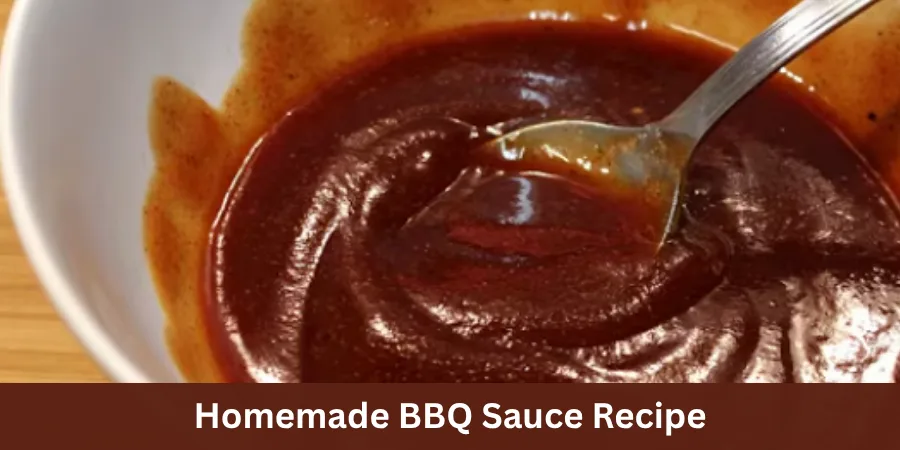
The sauce is ready when it coats a spoon evenly and falls in a slow, thick stream.
If it is still too thin, simmer it uncovered for another 3–5 minutes.
If it becomes too thick, whisk in water 1 tablespoon at a time until the desired consistency is reached.
Taste the sauce after cooking and make a final salt adjustment if needed.
Because sodium levels can vary between brands of tomato sauce and Worcestershire sauce, add salt in ⅛ teaspoon increments.
Taste after each addition until the flavor is balanced.
Avoid adding a large amount of salt at once because small adjustments provide better control over the final flavor.
Remove the sauce from the heat and allow it to cool for about 10–15 minutes.
The sauce will become slightly thicker as it cools.
Once cooled, transfer the homemade BBQ sauce to an airtight container and place it in the refrigerator.
It can be stored for up to 2 weeks.
The sauce can be used immediately after cooking or served with your favorite recipes once it reaches the desired temperature.
Variations To Try
There are several ways to customize this homemade BBQ sauce without changing its basic character.
These are optional adjustments rather than tested changes to the base recipe.
For a smoother powder-like texture, white pepper can replace black pepper or cracked black pepper.
If you prefer an extra spicy sauce, you can experiment with more cayenne pepper to taste or add a small amount of hot sauce.
You can also adjust the sweetness by changing the amount of brown sugar or using honey as the sweetener.
The seasonings can be customized by changing the amounts of onion powder, garlic powder, or smoked paprika.
These small adjustments allow you to change the heat, sweetness, smoke level, or seasoning balance while keeping the original BBQ sauce structure.
For a deeper smoky undertone, you can experiment with adding a little more liquid smoke for a stronger smoky character.
To make gluten-free BBQ sauce, use gluten-free liquid smoke such as Wright’s or Colgin.
For vegan BBQ sauce, use vegan Worcestershire such as Annie’s instead of regular Worcestershire.
If you want a smokier flavor, add a small amount of additional liquid smoke, but keep the amount controlled so it does not overpower the other flavors.
For a thicker sauce, simmer it longer so it reduces to the desired consistency.
The base recipe already uses a controlled simmer to concentrate the sauce, so any additional cooking should be done gradually.
These optional adjustments let you experiment with the texture, sweetness, heat, and smoke level while keeping the original flavor profile intact.
Is This Sauce Spicy?
This homemade BBQ sauce has mild heat from the cayenne pepper, but it is not overly spicy.
The brown sugar adds sweetness while the vinegar brings acidity to balance the overall flavor.
Together with the other seasonings, they create a sweet and tangy flavor with a little kick rather than strong heat.
For a milder BBQ sauce, reduce the cayenne or leave it out completely.
If you prefer a spicier flavor, add a little more cayenne.
The base recipe uses a small amount so the sauce stays approachable while still having a noticeable background warmth.
Serving Ideas
A fresh batch of homemade BBQ sauce is useful for much more than grilled meat.
I like keeping this BBQ sauce in the fridge because it works well as a condiment, marinade, sauce, or dip.
It can be used much like ketchup, but the homemade version adds a richer barbecue flavor to everyday meals.
There are plenty of ways to enjoy a batch, whether you are serving it with a main meal or using it as a simple dipping option.
For traditional BBQ meat, brush the sauce over pulled chicken, pulled pork, BBQ pulled chicken, BBQ pulled pork, chicken thighs, pork ribs, grilled chicken, ribs, or burnt ends.
It also works with other cuts of meat that are grilled, baked, or pulled.
For a casual meal, use it with burgers and sandwiches as a flavorful spread, or add it to BBQ chicken quesadillas.
It can also bring extra flavor to baked beans without requiring a separate sauce.
There are plenty of ways to use it beyond traditional barbecue.
Try it on BBQ chicken pizza in place of pizza sauce, or add it to pizzas for a different flavor.
A spoonful can also be mixed into soups or broths, or used as a dressing for salads and salad bowls.
It also pairs naturally with tacos, quesadillas, and burritos, giving familiar dishes a barbecue-style twist.
For snacks and party food, serve the dipping sauce with French fries, chicken tenders, onion rings, chicken nuggets, or veggie sticks.
It is also a good match for BBQ meatballs, meatballs, and cocktail meatballs.
The sauce can be served warm, at room temperature, or chilled depending on how it is being used.
With grilled meat, adding it during the finishing stage instead of heavily at the beginning helps maintain better texture and flavor control.
Storing
Storing the homemade BBQ sauce properly helps preserve its flavor and texture. Since it is not shelf-stable, let the sauce cool before placing it in an airtight container.
Jars with secure lids work well for this. Keep the container refrigerated, where the sauce can stay fresh for up to 2 weeks.
This makes it easy to have the sauce ready for different dishes throughout the week.
Freezing
Freezing is a convenient option when you want to keep the sauce longer.
Let it cool completely, then transfer the BBQ sauce to a freezer-safe container or freezer bag. I like using smaller portions or an ice cube tray so I can take out only what I need.
Freeze for approximately 3 months. When ready to use, thaw the sauce overnight in the refrigerator, then stir well before serving.
Notes
For storing, let the homemade BBQ sauce cool completely before transferring it to an airtight container.
Keep it in the refrigerator, where you can store it for up to two weeks. Using a clean spoon each time helps keep the sauce fresh during those two weeks.
For a vegan option, use a vegan brand of Worcestershire when preparing vegan BBQ sauce.
For a gluten-free option, choose a gluten-free brand of liquid smoke when making gluten-free BBQ sauce.
Nutrition Insight
One serving of this homemade BBQ sauce provides:
- 69 kcal
- 17 g carbohydrates
- 1 g protein
- 0 g total fat
- 0 g saturated fat
- 1 g fiber
- 13 g total sugar
- 118 mg sodium
These values are approximate and are based on the base recipe divided into about 10 equal servings.
The finished sauce yields approximately 9–10 servings depending on the final cooked yield and portion size.
The final nutrition may vary slightly depending on the ingredient brands used and the actual portion size.
Frequently Asked Questions
How long does homemade BBQ sauce last?
Your barbecue sauce will last for up to 2 weeks when stored in a sealed container in the refrigerator.
Keeping it properly stored helps maintain its quality between uses.
Can I use this recipe for canning?
This recipe does not include tested instructions for canning.
For that reason, specific guidance for canning homemade BBQ sauce is not included with this recipe.
Can this recipe be doubled or tripled?
This recipe is written for the listed amount of ingredients.
The engineered recipe does not provide specific measurements for a doubled or tripled batch, so those amounts are not specified here.
Can I make homemade BBQ sauce without ketchup?
Yes. This recipe does not use ketchup. Instead, tomato sauce and tomato paste create the tomato base.
The tomato paste also adds body and concentrated tomato flavor.
Dark brown sugar, honey, and molasses provide the sweetness and depth that ketchup would normally contribute in some barbecue sauce recipes.
How can I make BBQ sauce thicker?
If your sauce is thinner than you prefer, continue simmering it uncovered over medium-low heat for another 3–5 minutes.
Stir regularly as it reduces so the bottom does not stick.
The sauce should coat a spoon and fall in a slow thick stream. Remember that it will also become slightly thicker as it cools.
What should I do if my BBQ sauce becomes too thick?
If the sauce becomes thicker than you want, whisk in water 1 tablespoon at a time. Stir well after each addition and check the consistency before adding more.
Adding a small amount gradually gives you better control and helps prevent the sauce from becoming too thin.
Can I make this BBQ sauce less sweet?
Yes. The sweetness comes mainly from the dark brown sugar, honey, and molasses.
Because these ingredients are part of the engineered flavor balance, it is better to make small adjustments rather than removing a large amount at once.
If you are experimenting with the recipe, reduce or adjust the sweeteners gradually and taste the sauce after it has simmered.
Why does my homemade BBQ sauce taste too acidic?
If the sauce tastes more acidic than expected, avoid extending the simmer time, since reducing the sauce further can concentrate the acidity rather than balance it.
Instead, make sure the sweeteners have fully dissolved and the sauce has had its full 12–18 minute simmer — not longer.
A small increase in brown sugar or honey during an experimental batch can help round out the tang, but this changes the tested formula
Can I use homemade BBQ sauce as a marinade?
The sauce can be used as a marinade as long as it is handled safely.
If the sauce comes into contact with raw meat, do not use that same portion as a dipping or finishing sauce unless it is thoroughly cooked first.
A separate portion of fresh sauce should be used for serving after the meat has been marinated.
Why should I taste the BBQ sauce before storing it?
Tasting the sauce after cooking gives you a chance to make the final seasoning adjustment before refrigeration. The sodium level can vary between brands of tomato sauce and Worcestershire sauce.
If needed, add salt in ⅛ teaspoon increments and taste after each addition. This helps you reach a balanced flavor without accidentally making the sauce too salty.