Lemon Dill Sauce
A good recipe does not need to be complicated. This Lemon Dill Sauce is quick, simple, and elegant with a creamy texture built from everyday ingredients.
Fresh dill, lemon, and garlic give it a bright, tangy flavor, while the sauce develops a rich texture and gentle citrus tang.
The earthy flavor of dill adds depth without making the sauce feel heavy, creating a delicious and comforting addition to a meal.
Lemon Dill Sauce-The Short Answer
This lemon dill sauce is creamy, tangy, and ready in 20 minutes using a simple roux—no heavy cream. Perfect over pan-seared salmon, it’s the easy weeknight dinner upgrade you’ll make again and again.
I especially enjoy this sauce with tender, flaky pan-fried salmon where the fish is coated and drizzled with the warm sauce before serving.
It also works well as a complement to baked salmon, chicken, and roasted vegetables.
For something more casual, serve it as a dip with crispy potatoes.
Each bite brings together the creamy base, fresh herbs, garlic, and lemon in a balanced way.
My inspiration for this combination comes from Sweden, where I first tried a similar sauce while traveling during a summer vacation.
It came in a box of brown paper sachets, and we were instantly hooked.
After bringing some sachets back to Germany, I eventually had to recreate the sauce from my memories when they ran out.
During the final recheck before posting, I served it to my son who called it perfect.
That gave it my family’s seal of approval, and it remains a favorite because it keeps well in the fridge and can be served with several different dishes.
Why You’ll Love It
What I love about this sauce is how easily it can make a simple meal feel a little more special.
It has a smooth creamy texture with bright lemon and fresh dill flavors, while garlic and Dijon mustard add savory depth.
The result is fresh and flavorful without being complicated.
I often make it when I want a tasty addition to a familiar dish without spending much time in the kitchen.
It is especially delicious with salmon because the creamy sauce complements the juicy fish without overpowering it.
Fresh garden dill and lemon make a natural pairing, giving the dish a bright flavor that feels a little fancy and restaurant-inspired.
It is also a welcome change from the usual chicken-based meal and works well as a weeknight option.
The sauce can be served with salmon, cod, other mild fish, roasted potatoes, asparagus, or chicken.
The simple preparation also makes it practical for company.
I like that the sauce can be prepared ahead and gently reheated when needed, which makes serving easier.
Its creamy body, savory notes, citrus brightness, and fresh dill work together to create a balanced sauce that fits both everyday meals and more special occasions.
Ingredients Needed
For the Salmon
1 pound fresh salmon, cut into 4 pieces
¼ teaspoon garlic powder
Salt, as needed
Black pepper, as needed
1 tablespoon all-purpose flour, for coating salmon
1 tablespoon olive oil
1 tablespoon butter
For the Sauce
2 tablespoons unsalted butter (30 g)
2 tablespoons all-purpose flour (30 g)
½ cup vegetable broth (125 ml)
1½ cups whole milk (375 ml)
1 clove garlic, minced
1 teaspoon Dijon mustard
2 tablespoons fresh lemon juice
1 teaspoon lemon zest
½ teaspoon salt
¼ teaspoon black pepper
2 tablespoons fresh dill, finely chopped
Ingredients Notes
For the salmon, use 1 pound fresh salmon cut into 4 pieces.
Season the salmon with garlic powder, salt, and pepper before cooking.
A light coating of flour helps create a delicate crust on the fish when it is pan-fried.
The flour coating also helps the salmon develop a slightly golden exterior while keeping the inside tender.
The warm sauce starts with a roux base using 2 tablespoons or 30 grams butter and 2 tablespoons or 30 grams all-purpose flour.
The roux gives the sauce structure and creates a smooth creamy texture without relying on heavy cream.
Cooking the butter and flour together helps remove the raw flour taste before the liquid is added.
For the creamy base, gradually add ½ cup or 125 ml vegetable broth followed by 1½ cups or 375 ml whole milk.
The vegetable broth adds savory depth, while whole milk provides the creamy dairy base needed for the sauce.
This combination creates a rich texture while keeping the sauce lighter than a heavy cream-based sauce.
For the flavor base, use 1 clove minced garlic, 1 teaspoon Dijon mustard, 2 tablespoons fresh lemon juice, and 1 teaspoon lemon zest.
Garlic adds savory depth, while Dijon mustard brings a subtle sharpness that balances the creamy sauce.
The lemon juice provides acidity and brightness, helping balance the richness of the milk and butter.
Lemon zest adds concentrated citrus aroma without making the sauce too thin.
Season the sauce with ½ teaspoon salt and ¼ teaspoon black pepper.
Adjust the salt based on the vegetable broth used because different brands can have different sodium levels.
Black pepper adds a mild warmth that supports the lemon and dill flavors.
Finish the sauce with 2 tablespoons fresh dill, finely chopped.
Fresh dill provides the main herbal flavor and is best added near the end to preserve its fresh character.
If fresh dill is unavailable, use 2 teaspoons dried dill as an alternative.
Adding the dill at the finishing stage keeps the sauce bright and prevents the herb flavor from becoming muted.
How to Make Lemon Dill Sauce
This Lemon Dill Sauce starts with a simple roux that gives it a smooth creamy texture without relying on heavy cream.
In a saucepan over medium heat, melt 2 tablespoons unsalted butter, then lower the heat to medium-low.
Add 1 clove minced garlic and cook for 30–40 seconds until fragrant, making sure it does not brown.
Add 2 tablespoons all-purpose flour and whisk continuously for about 1 minute.
This short cooking time helps develop the roux and removes the raw flour taste.
Slowly add ½ cup vegetable broth and 1½ cups whole milk, whisking as you go to keep the mixture smooth and prevent lumps.
Once everything is incorporated, bring the sauce to a gentle simmer rather than a hard boil.
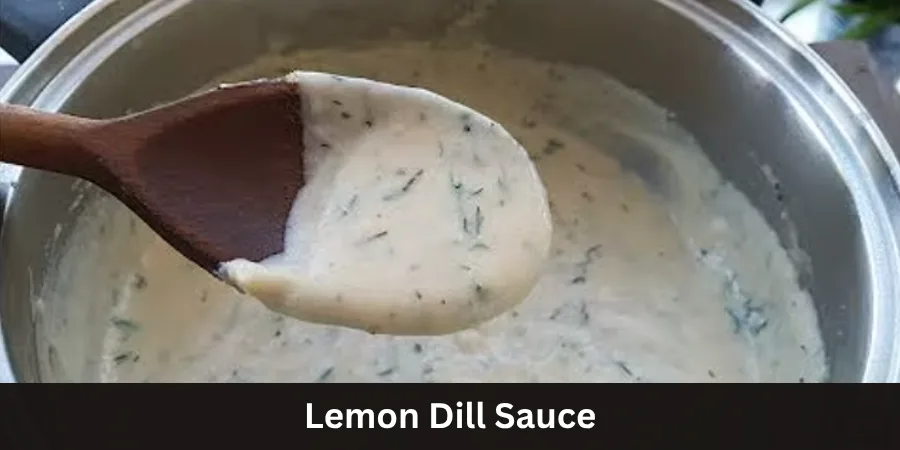
Stir frequently as it cooks until it thickens enough to coat the back of a spoon.
Add 1 teaspoon Dijon mustard, ¼ teaspoon black pepper, and salt according to the broth used.
I find the spoon-coating stage more reliable than judging the sauce by time alone because it shows when the texture is ready.
Remove the pan from the heat before adding 2 tablespoons fresh lemon juice, 1 teaspoon finely grated lemon zest, and 2 tablespoons fresh dill finely chopped.
Whisk gently until everything is incorporated, then taste and adjust the seasoning if needed.
Adding the lemon after the heat is off helps control the acidity while keeping the sauce smooth.
The lemon zest brings a concentrated citrus aroma, while the fresh dill gives the sauce its main herbal character.
Serve immediately while warm.
This sauce pairs naturally with salmon and other mild fish.
For the salmon method, cut the fish into four pieces, season with garlic powder, salt, and pepper, then lightly coat each piece with flour.
Heat olive oil and butter in a skillet over medium-high heat.
Pan fry the salmon for 3–4 minutes per side until golden and browned.
Transfer it to a plate before it can overcook.
Serve the cooked salmon with the warm Lemon Dill Sauce spooned over the top or drizzled around the fish.
Finish with fresh chopped parsley and a squeeze of lemon juice if desired.
The sauce complements the salmon without overpowering the delicate flavor of the fish.
Variations and Substitutions
There are a few simple ways to adjust the flavor without changing the basic sauce structure.
Chicken broth can replace vegetable broth when you want a deeper savory flavor.
For the brightest flavor, fresh dill works best, but dried dill can also be used.
If using dried dill instead of fresh, use 2 teaspoons.
For substitutions, be careful with cream, milk, and half-and-half.
The acid from lemon can cause dairy to curdle, which can affect both the texture and taste of the sauce.
The original formula uses whole milk in a roux-based structure rather than relying on cream for thickness.
This method provides the creamy texture while keeping the sauce stable.
If you want extra tang or a sharper citrus punch, add a little more lemon zest at the end rather than increasing the lemon juice too much.
The zest gives a more concentrated citrus flavor while keeping the sauce from becoming too thin.
For a richer finish, stir in 1 tablespoon grated Parmesan at the end.
It adds a savory flavor with a subtle nutty note.
Serving
Lemon dill sauce is a natural partner for salmon because its tangy flavor balances the richness of the flaky fish.
It also pairs well with baked cod and pan-fried plaice.
For these mild fish options, the sauce can be spooned over a piece of fish just before serving.
I also like it with green asparagus as a dipping sauce when I want an easy vegetable side.
For a heartier meal, serve it with roasted potatoes or other vegetables.
The sauce also works with chicken, especially a pan-seared breast, where the bright lemon and dill flavors complement the poultry without overwhelming it.
These pairings make the sauce useful for both seafood and chicken, whether it is served over the main dish or offered on the side for dipping.
Storage and Make-Ahead Tips
For meal prep, I often make lemon dill sauce on Sunday so I can enjoy it with different foods throughout the week.
Once cooled, transfer any leftovers to an airtight container and keep them in the refrigerator.
The sauce keeps well for up to 4 days.
I prefer to eat seafood fresh, but leftover fish can be stored for 2–3 days in the fridge.
For reheating, warm the sauce gently on the stove over very low heat, stirring or whisking as needed.
Heating it slowly helps prevent the sauce from becoming too thick or starting to separate.
If it has thickened during storage, add a small splash of milk or broth to loosen it.
This gentle approach also helps keep the fish from becoming dry.
Unlike some creamy sauces made mainly with dairy fat, cream, or a yogurt-based sauce, this version uses a roux to provide structure.
The roux holds together the sauce and makes freezing a practical option while helping preserve flavor and texture.
This means the freezer can be a convenient choice when storing it for longer than the refrigerator allows.
If freezing ahead, the sauce can be frozen for up to 3 months.
Thaw it in the fridge overnight, then gently reheat it on the stove.
Whisk in a little milk or broth if needed to restore the consistency.
For the freshest herbal flavor, you can add fresh dill after reheating since freezing may affect its color and texture.
Tips for the Best Lemon Dill Sauce
A few simple choices can make a noticeable difference in the finished sauce.
I prefer fresh dill because it gives the sauce a clean herbal taste.
If fresh dill is not available, 2 teaspoons dried dill can be used.
Freshly ground black pepper adds a mild peppery note without overpowering the lemon and herbs.
Keeping these flavors balanced helps the sauce stay fresh and creamy rather than letting one ingredient dominate.
A roux is made by cooking butter and flour together before adding the liquid.
Once the melted butter has combined with the flour, cook it for about 1 minute while whisking constantly.
This removes the raw flour taste and gives the mixture a light nutty smell.
Add the broth and milk gradually while whisking after each addition so the flour can absorb liquid evenly.
This slower process helps prevent lumps from forming.
Keep the heat at moderate heat or medium heat while the sauce cooks.
Too much heat can cause the roux to scorch or thicken unevenly.
Continue to whisk until the mixture becomes smooth and thick enough to coat the back of a spoon.
If a lumpy roux does develop, an immersion blender can help smooth out the sauce quickly.
The sauce should thicken gently before the lemon and dill are added.
This order helps maintain the intended creamy texture while keeping the fresh herbal character clear.
It is a small but useful part of the technique, especially when making this warm sauce for the first time.
Notes
If using dried dill instead of fresh dill, use 2 teaspoons as the alternative quantity.
This keeps the dried dill amount consistent throughout the recipe.
For salmon, cooking time can vary depending on the size and thickness of the fish.
The salmon should be cooked through before serving with the warm Lemon Dill Sauce.
The sauce is prepared separately and spooned over the cooked salmon rather than cooking the salmon again in the sauce.
For a cream-based sauce, the source warns against replacing cream with half-and-half or milk because the acidity from lemon can cause the sauce to curdle.
However, the final engineered recipe uses whole milk with a roux rather than heavy cream.
This warning should not be used to suggest changing the final formula.
Nutrition
A serving of about 2 tablespoons contains:
- 34 kcal
- 2.6 grams carbohydrates
- 0.8 grams protein
- 2.1 grams total fat
- 1.3 grams saturated fat
- 0.2 grams fiber
- 120 milligrams sodium
These numbers are calculated estimates based on the final recipe.
The actual sodium content can vary depending on the broth and Dijon mustard used.
For that reason, the nutrition information is best treated as an estimate rather than an exact measurement.