How to Make Chimichurri Sauce at Home
This Argentinian sauce is an easy way to add a fresh, herbaceous, and vibrant flavor to a meal. Made with parsley, cilantro, and other fresh herbs, this chimichurri has a bright, tangy taste with a garlicky kick.
I like making this recipe when I want a fresh finishing sauce that comes together without much effort. The combination of herbs, garlic, olive oil, and acidity creates a balanced sauce that can instantly add more flavor to simple meals.
Chimichurri Sauce Recipe-The Short Answer
Chimichurri is famously good with grilled steak, but its uses do not stop there. A drizzle over chicken, fish, or vegetables adds a fresh layer of flavor and makes a simple dish feel more complete.
It is also a practical upgrade for meat and poultry when you want something bright alongside the main dish. The fresh herbs bring a lively contrast to rich, savory foods without covering their natural flavor.
This sauce is packed with fresh herbs and is easy to keep on hand as a go-to finishing sauce. Once prepared, it can add an extra touch of freshness to different meals and bring a bright, flavorful finish whenever you need it.
About This Recipe
What Makes Chimichurri Special?
Chimichurri is a vibrant herb sauce that originated in Uruguay and Argentina and has many variations across South America.
This fresh mixture is commonly made with parsley, oregano, garlic, olive oil, and red wine vinegar, while red pepper flakes or fresh red chili can add a little heat.
The combination creates a fresh herbal flavor with enough acidity to balance the richness of the oil. The result is a sauce that feels light and bright while still adding depth to grilled foods and everyday meals.
A Fresh and Simple Sauce
This healthy recipe uses fresh herbs and has no added sugars, which makes it different from many barbecue sauces.
I like using it when a meal needs a quick burst of fresh flavor without adding a heavy sauce. The simple combination of herbs, acidity, garlic, and olive oil makes it easy to serve in several different ways.
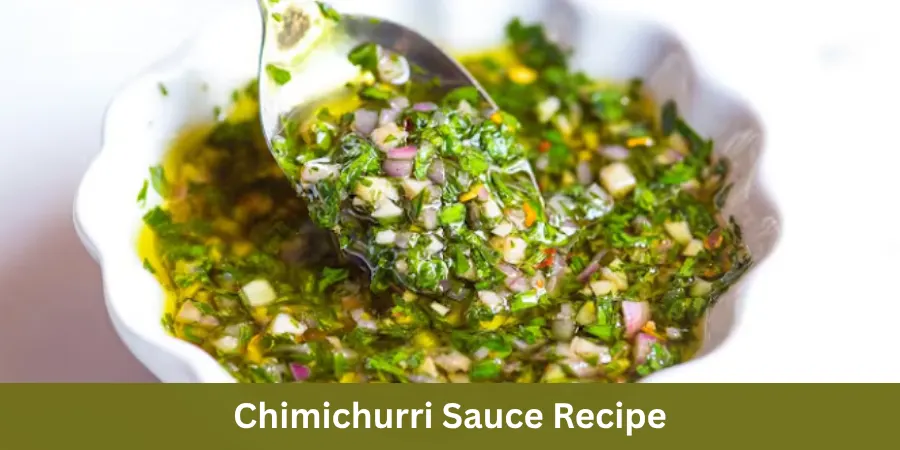
The texture is also an important part of chimichurri. The herbs should remain visible throughout the sauce instead of being blended into a smooth puree.
Keeping the mixture loose and textured allows the fresh ingredients to stand out and gives the sauce its traditional character.
This Tangy Herb Sauce Adds Big Flavor to Any Dish
When I am firing up the grill, especially during summer, I like keeping things simple and letting the food develop its own flavor.
Chimichurri is a South American sauce made with fresh herbs, garlic, and vinegar, and its bright, tangy taste adds a fresh contrast to the rich, savory flavor of grilled foods.
I especially like it with steak, chicken, pork, fish, and vegetables because it adds a fresh herb note without overpowering the food.
Unlike marinades or spiced dry rubs, chimichurri works especially well as a finishing sauce.
As food cooks over hot grill grates, it develops a deep char and smoky flavor. Once the food comes off the heat, spooning the sauce over it adds brightness while allowing that grilled flavor to remain noticeable.
The tang of the vinegar, the bite of the garlic, and the freshness of the herbs create a lively contrast with smoky and savory foods.
A variety of herbs gives chimichurri its fresh character, while red wine vinegar, lemon juice, garlic, and olive oil create a balanced mixture.
That combination provides plenty of flavor without making the preparation complicated.
Whether it is a summer grilling meal or something you enjoy throughout the year, a spoonful over protein or vegetables adds an extra touch of freshness and makes the dish feel more complete.
Ingredients Needed
60 grams flat-leaf parsley leaves
10 grams fresh cilantro leaves
5 grams fresh oregano leaves
¼ cup finely minced red onion (approximately 38 grams)
3 medium garlic cloves (approximately 9 grams)
½ teaspoon red pepper flakes (approximately 1 gram)
¼ cup red wine vinegar (approximately 60 ml)
2 tablespoons fresh lemon juice (approximately 30 ml)
½ cup extra-virgin olive oil (approximately 120 ml or 109 grams)
½ teaspoon fine sea salt (approximately 3 grams)
Ingredients Notes
The base of this chimichurri sauce is fresh herbs, with flat-leaf parsley as the main herb.
Use 60 grams parsley leaves after removing the coarse stems. This keeps the sauce parsley-forward while creating the fresh herbal flavor that defines chimichurri.
Add 10 grams fresh cilantro and 5 grams fresh oregano to build more complexity.
Cilantro adds a bright, fresh note, while oregano provides an earthy herbal depth that balances the sharper ingredients.
If fresh oregano is unavailable, 1 teaspoon dried oregano can be used instead.
Because herb measurements can vary significantly depending on how loosely or firmly they are packed, weighing the herbs gives the most reliable result.
Fresh herbs should be cleaned and dried thoroughly before preparing the sauce.
Extra moisture from wet herbs can dilute the flavor and affect the final texture.
The goal is a loose sauce where the herbs remain visible rather than turning into a smooth mixture.
For the aromatics, use ¼ cup finely minced red onion, approximately 38 grams, and 3 medium garlic cloves, approximately 9 grams.
Finely mincing these ingredients helps distribute their flavor evenly throughout the sauce while keeping small pieces visible.
The garlic should not be blended into a smooth paste because small pieces provide a better texture and a more balanced garlic flavor.
Add ½ teaspoon red pepper flakes, approximately 1 gram, for controlled heat.
The amount can be adjusted depending on your preferred spice level.
The red pepper flakes should add a gentle warmth without overpowering the fresh herbs, acidity, and garlic.
The acidic base uses ¼ cup red wine vinegar, approximately 60 ml, and 2 tablespoons fresh lemon juice, approximately 30 ml.
Red wine vinegar provides the main tangy flavor that gives chimichurri its signature brightness.
Lemon juice adds a fresher citrus note and helps balance the richness of the olive oil.
Together, they create the acidity needed to cut through rich grilled foods and savory dishes.
Use ½ cup extra-virgin olive oil, approximately 120 ml or 109 grams, for richness and the correct loose, spoonable texture.
The olive oil brings the ingredients together while allowing the herbs and aromatics to remain distinct.
The finished sauce should not become a thick emulsified dressing. The oil should stay visibly distributed throughout the herbs.
Season with ½ teaspoon fine sea salt, approximately 3 grams.
Salt measurements can vary depending on the brand and grain size, so the weight measurement provides better accuracy.
Adjust the final seasoning after all ingredients are combined because the vinegar, herbs, garlic, and olive oil need time to blend together.
How to Make Chimichurri Sauce
A good chimichurri recipe starts with fresh parsley, cilantro, and oregano. You can prepare it by hand or with a mini food processor, but the goal remains the same: finely chopped herbs with visible texture.
The herbs should not be blended into a smooth puree because over-processing can bruise the herbs and change the sauce into a heavy dressing.
The finished chimichurri should have small pieces of herbs and onion throughout, with the oil and other ingredients remaining visibly distributed.
Prepare the Ingredients
Gently wash the parsley, cilantro, and oregano, then dry them thoroughly with a clean kitchen towel.
Removing excess moisture is important because wet herbs can dilute the sauce and reduce the intensity of the fresh herb flavor.
Remove the coarse stems from the parsley and cilantro, and remove the tougher stems from the oregano before weighing the leaves.
Finely mince the red onion into pieces about 2–3 mm in size and finely mince the garlic.
Do not turn the garlic into a smooth paste. Small visible pieces create a better texture and allow the garlic flavor to spread evenly through the sauce.
Make the Acid Mixture
In a small bowl, whisk together the red wine vinegar, lemon juice, salt, and red pepper flakes for 15–20 seconds.
This helps the salt distribute evenly throughout the acidic mixture.
Add the minced onion and garlic, then stir for about 30 seconds.
Allowing the aromatics to sit briefly in the vinegar and lemon mixture helps soften their sharpness while building a more balanced flavor.
Chop and Combine the Herbs (Hand Method)
Using a sharp knife, chop the parsley, cilantro, and oregano together until the pieces are about 3–5 mm.
The herbs should be finely chopped but still have texture. They should not become pasty or crushed into a smooth mixture.
Add the chopped herbs to the acid and aromatics, then gently fold everything together with a silicone spatula about 8–10 times.
Stop mixing once the ingredients are evenly distributed.
Gradually add the olive oil and mix gently for about 20–30 seconds.
Do not whisk the sauce into a smooth emulsified dressing.
The oil and herbs should remain visibly distributed throughout the mixture, which gives chimichurri its traditional loose texture.
Food Processor Method
For the processor version, use a mini food processor with a 3–4 cup capacity.
A full-size processor bowl is too large for this smaller amount of onion and garlic, and it can make it difficult to chop the ingredients evenly.
If a full-size processor is the only option available, mince the onion and garlic by hand instead.
Pulse the onion and garlic dry for 4–6 short pulses, scraping down the sides when needed, until the pieces are about 2–3 mm.
Stir them into the acid mixture as described above.
Then add the dry herbs and pulse 3–4 short times until they are finely chopped but still retain some texture.
If the processor bowl is small, process the herbs in two batches.
Fold the chopped herbs into the acid and aromatics mixture, then add the olive oil by hand.
Do not process the oil into the sauce.
Blending the oil can make the chimichurri cloudy and overly emulsified, while adding it by hand keeps the loose herb-filled texture that makes this sauce distinctive.
Variations To Try
Hotter Version
For a spicier chimichurri, replace the ½ teaspoon dried red pepper flakes with ½ small Fresno chili, finely minced.
Leave out the dried flakes when using fresh chili.
Keeping the seeds in creates medium heat, while removing them gives a milder result.
Fresh chili can taste hotter than dried flakes, so start with a smaller amount and increase gradually if needed.
Parsley-Forward Argentine-Style Version
For a parsley-forward variation, leave out the 10 grams cilantro and increase the parsley to 70 grams.
Keep the rest of the formula the same.
The total herb weight remains at 75 grams, while the flavor becomes more focused on parsley and oregano.
Smoky Version
For a subtle smoky variation, add ¼ teaspoon smoked paprika, about 0.5 grams, while keeping the ½ teaspoon red pepper flakes
Use only a small amount because chimichurri should remain herb-forward.
Too much smoked paprika can cover the fresh flavor of the herbs.
Can I Use Dried Oregano?
Yes, dried oregano can be used when fresh oregano is unavailable.
Fresh oregano provides the strongest flavor, but dried oregano still adds the earthy herbal note needed for the sauce.
Use 1 teaspoon, about 1 gram, dried oregano instead of 5 grams fresh oregano.
Stir the dried oregano into the vinegar and lemon juice mixture so it has time to rehydrate before combining it with the other ingredients.
Do not replace fresh oregano with the same weight of dried oregano because dried herbs are much more concentrated and can make the sauce taste too strong.
Rest and Adjust
After combining all the ingredients, let the chimichurri rest for 15–30 minutes at room temperature.
This resting time allows the garlic, onion, herbs, acid, salt, and olive oil to blend together and develop a more balanced flavor.
Do not leave the sauce at room temperature for longer than about an hour.
If you are not serving it immediately, transfer the chimichurri to a covered glass jar and refrigerate it.
The finished sauce should be loose and spoonable rather than watery or completely smooth.
You should still be able to see the herbs and small pieces of onion throughout the mixture.
Chimichurri is naturally tangy because of the vinegar and lemon juice.
If the flavor feels too sharp, especially when serving it with fish or vegetables, stir in 1–2 teaspoons of olive oil instead of adding more vinegar.
If the sauce seems unusually thick, 1–2 teaspoons of olive oil can also help loosen the texture.
Taste and adjust the salt at the end.
How to Serve Chimichurri
Chimichurri is a versatile finishing sauce that works especially well with steak, grilled chicken, fish, and shrimp.
Spoon it over the food just before serving so the fresh herb texture and bright acidity remain noticeable.
It also pairs well with roasted vegetables, potatoes, and grains, adding freshness without requiring extra cooking.
You can also use it as a light dressing for salads.
For serving, about 1–2 tablespoons works well for steak, chicken, and vegetables.
For fish, start with about 1 tablespoon.
For shrimp, use approximately 1 tablespoon per 4–5 ounces, and for cooked vegetables, about 1–2 tablespoons per cup.
These amounts are a practical starting point and can be adjusted depending on personal preference.
For the best texture and flavor, use chimichurri as a finishing sauce rather than cooking it with the food.
Adding it after cooking keeps the herbs visible and allows the fresh flavor to stand out instead of being muted by heat.
Storage and Freezing
Store chimichurri in an airtight glass container in the refrigerator.
Because it contains fresh garlic and oil, use it within 3–4 days for the best quality, with a maximum refrigerated storage time of 5 days.
Do not store it at room temperature, and always use a clean spoon when serving.
Over 4–5 days, the acidity gradually changes the herbs from bright green to olive-brown, so the best color and flavor are usually during the first 1–2 days.
Olive oil becomes cloudy and firm when refrigerated.
Take the sauce out about 20–30 minutes before serving and stir it well to redistribute the herbs and oil.
Do not leave the sauce at room temperature for more than 2 hours in total, including both the resting time and the time it spends on the table.
For longer storage, portion the chimichurri into an ice cube tray and freeze it.
A standard cube holds about 2 tablespoons, which equals one serving, or you can fill each cube halfway for about 1 tablespoon portions.
Once frozen, transfer the cubes to an airtight freezer bag and use them within 1 month.
Thaw the amount needed in the refrigerator and stir well before serving.
The herbs may become slightly softer and darker after freezing, but the sauce remains useful for cooked meats and vegetables.
Tips for the Best Chimichurri
Start with the freshest ingredients possible for the best flavor.
Use fresh herbs instead of limp or wilted ones, and avoid bottled garlic and dried onion.
The combination of parsley, cilantro, fresh oregano, garlic, and onion creates the fresh herbal character that makes chimichurri unique.
Using good-quality olive oil and properly seasoning with salt also helps improve the final flavor.
If chopping by hand, finely chop the herbs so the sauce does not become too chunky.
If using a food processor, use short pulses and avoid over-processing.
The herbs should keep some body and texture instead of turning into a puree.
This keeps the mixture bright and fresh while allowing each ingredient to remain noticeable.
For the best texture, build the sauce in the correct order.
Whisk the vinegar and lemon juice with the salt and red pepper flakes first, then stir in the onion and garlic.
Let them sit briefly before gently folding in the chopped herbs.
Add the olive oil last and stop mixing once everything is evenly distributed.
This keeps the herbs distinct and prevents the sauce from becoming overly smooth or emulsified.
Notes
For the best flavor, prepare the sauce 1–3 hours before serving so the herbs and seasonings have time to blend.
Let it rest for 15–30 minutes at room temperature first, then refrigerate it until serving time.
If you do not have cilantro, leave it out and use 70 grams parsley instead.
If fresh oregano is unavailable, use 1 teaspoon dried oregano.
This recipe yields about 1⅓ cups, or about 10–11 servings of 2 tablespoons each.
The final texture should remain loose and spoonable, with visible herbs and small pieces of onion throughout.
Nutrition
A 2 tablespoons serving of this Chimichurri Sauce contains approximately:
96 kcal
10.1 g Total Fat
1.4 g Saturated Fat
1.3 g Carbohydrates
0.4 g Fiber
0.5 g Sugar
0.3 g Protein
115 mg Sodium
55 mg Potassium
0 mg Cholesterol
These Nutrition Facts are based on the final 325 g recipe formula and are calculated for an approximate 2-tablespoon portion.
The exact values may vary slightly depending on ingredient brands and the precise herb weights used.
For practical serving, measuring 2 tablespoons at a time gives a consistent portion and makes the nutrition information easier to track.