Hollandaise Sauce Recipe
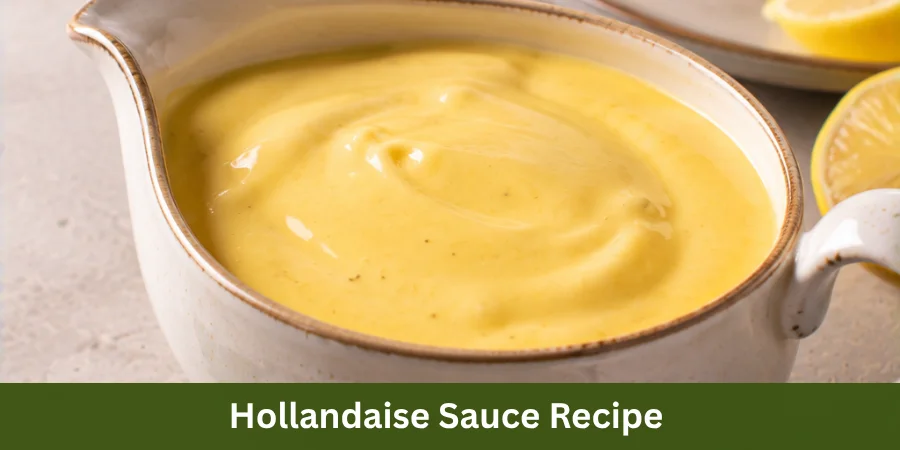
Hollandaise sauce is a classic creamy sauce often served at breakfast and brunch. It is especially well suited for poached eggs and Eggs Benedict, where its rich buttery character and fresh lemon flavor add a balanced finishing touch.
A small drizzle is usually enough to complement the dish without overpowering its other flavors.
Hollandaise Sauce-The Short Answer
This recipe uses a simple stovetop method to create a silky, smooth sauce. Hollandaise is an emulsion, so it requires gentle heat and continuous whisking to help the egg yolks and butter combine without scrambling.
A double boiler is not required for this method.
Its lemony flavor works well beyond Eggs Benedict. The sauce can be spooned over vegetables, roasted vegetables, salmon, or steak, adding richness and a smooth texture to each dish.
Why This Recipe
My stovetop method makes this sauce simple enough for beginners. It is an easy way to prepare a creamy, smooth sauce from scratch in just a few minutes.
You do not need a blender, double boiler, or clarified butter. Instead, small pieces of cold butter are gradually incorporated into the egg yolks while whisking, helping create a smooth texture.
The key is gentle heat and constant whisking. Start over low heat and adjust toward medium-low only if needed. This gives the egg yolks enough heat to thicken gradually while reducing the risk of curdling.
The method also includes simple troubleshooting steps for a sauce that becomes too thick or starts to separate.
If the sauce begins to separate, remove it from the heat immediately and whisk in 1 teaspoon of warm water. This can help bring the emulsion back together.
For serving, spoon it over poached eggs, crispy bacon, and toasted English muffins for Eggs Benedict. It also works well with vegetables, steak, or salmon.
Ingredients Needed
- 3 large egg yolks
- 2 tablespoons lukewarm water
- 2 teaspoons fresh lemon juice
- ½ teaspoon Dijon mustard
- 8 tablespoons unsalted butter
- ¼ teaspoon fine sea salt
- ⅛ teaspoon cayenne pepper
Ingredients Notes
A good Hollandaise starts with a simple, balanced set of ingredients. The egg yolks create the rich base and help the sauce emulsify and thicken.
Lukewarm water keeps the mixture workable, while fresh lemon juice balances the richness of the butter.
Dijon mustard adds subtle tang and savory depth to the sauce.
Use unsalted butter in small pieces so it melts gradually while you whisk. This helps maintain the emulsion and creates the creamy, silky texture expected from Hollandaise.
Salt and cayenne pepper provide the final seasoning and can be adjusted carefully to taste.
The egg whites are not required for Hollandaise, so they can be saved for another recipe.
Preparing everything before cooking is useful because the sauce thickens quickly.
How to Make Hollandaise Sauce
This recipe moves quickly, so measure and prepare all the ingredients before starting. Separate the eggs and keep the egg yolks and egg whites apart.
Add the yolks, lukewarm water, lemon juice, and Dijon mustard to a small non-reactive saucepan and whisk until well combined.
Place the saucepan over low heat and add the cold butter in small pieces. Whisk continuously as the butter melts and becomes incorporated into the egg mixture.
Continue cooking gently until the sauce thickens and becomes smooth and silky. The process should take about 3 to 5 minutes, depending on the pan and heat level.
If the butter begins to sizzle or the egg mixture starts to clump, immediately lift the pan from the heat and continue whisking. The sauce should thicken gradually without becoming grainy.
To check the consistency, coat the back of a spoon with the sauce and draw a line through it with your finger. If the line stays clear, the hollandaise is ready.
Remove the sauce from the heat and season with salt and cayenne pepper to taste.
If you prefer white pepper, it can be used in place of cayenne.
If the sauce becomes too thick, add 1 teaspoon of warm water and whisk vigorously. Add another teaspoon only if needed until the desired consistency is reached.
Serve the hollandaise warm immediately after preparing it. The sauce thickens slightly as it cools, so gentle handling and controlled warmth help maintain its smooth texture.
How to Fix Hollandaise Sauce
If hollandaise sauce becomes too thick or begins to separate, act quickly and keep a close eye on its consistency.
A sauce that is too thick can usually be corrected by whisking in warm water, 1 teaspoon at a time, until it reaches the desired consistency.
If the sauce is too thin, keep it over very low heat and whisk continuously for another 15 to 30 seconds. Remove it from the heat as soon as it begins to thicken.
Avoid increasing the heat aggressively because excessive heat can cause the egg yolks to curdle.
If the mixture begins to separate, immediately remove the pan from the heat. Add 1 teaspoon of warm water and whisk vigorously until the sauce becomes smooth again.
Continue whisking until the emulsion comes back together.
The main goal is to correct the texture without adding unnecessary heat. Gentle temperature control and continuous whisking help maintain the emulsion.
Storage and Reheating
For the best texture, Hollandaise sauce is best served fresh. If you have leftover sauce, transfer it to an airtight container and refrigerate it promptly.
When reheating, warm the sauce slowly over very low heat and whisk frequently. If it becomes too thick, add warm water 1 teaspoon at a time until the desired consistency returns.
Avoid simmering or boiling the sauce because excessive heat can cause the emulsion to separate.
If the sauce begins to separate during reheating, remove it from the heat immediately, add 1 teaspoon of warm water, and whisk until it becomes smooth again.
Tips
Good temperature control is important when making Hollandaise. Start with the egg mixture and cold butter over low heat, allowing the butter to melt gradually as you whisk.
Excessive heat can cause the eggs to curdle, while insufficient heat may slow the thickening process.
Keep whisking throughout cooking so the mixture stays smooth and evenly heated. This gradual method gives you better control over the final texture.
For seasoning, 1/8 teaspoon cayenne adds subtle heat, while 1/2 teaspoon Dijon mustard provides extra flavor and a gentle savory note. Adjust either according to taste.
Hollandaise is best served fresh because its texture is at its smoothest immediately after preparation.
If it becomes too thick, whisk in a small amount of warm water gradually until the desired consistency returns.
Nutrition
A serving of Hollandaise sauce provides approximately:
- Calories: 237 kcal
- Fat: 26g
- Carbohydrates: 1g
- Protein: 3g
These values are approximate and are based on the stated ingredient quantities divided into 4 servings.
The sauce gets most of its richness from the butter and egg yolks, while the small amount of carbohydrates and protein comes primarily from the egg yolks and other ingredients.
The exact nutritional values can vary slightly depending on the specific butter and other ingredients used.
FAQ
Can You Use an Immersion Blender?
Yes. An immersion blender can be used as an alternative method for making Hollandaise sauce.
Add the egg yolks, lemon juice, Dijon mustard, salt, and cayenne to a tall cup or jar, leaving the butter aside.
Keep the immersion blender firmly planted at the bottom of the container and begin blending.
Slowly drizzle in melted butter in a steady stream while blending. The mixture will gradually emulsify and become smooth and creamy.
Continue adding the butter slowly until the sauce reaches the desired consistency.
This is an alternative to the stovetop method described above.
Pinterest Pins