Hot Dog Chili Sauce Recipe
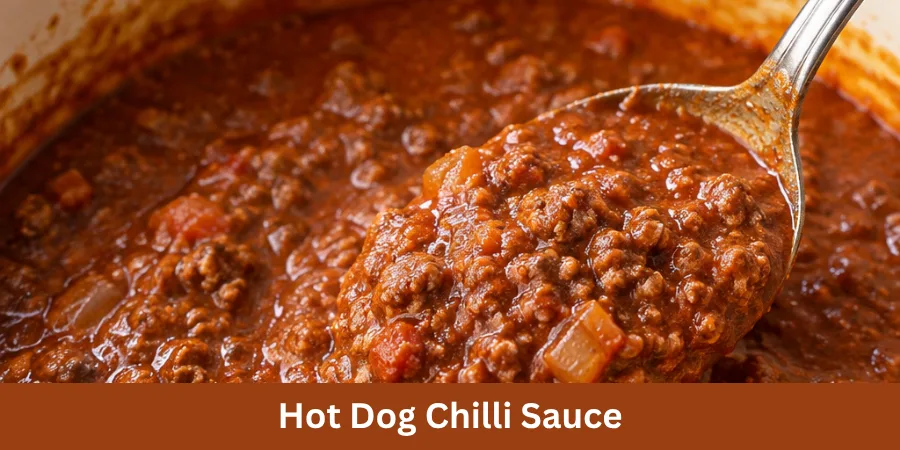
This homemade hot dog chili is a meaty, savory sauce with a fine texture that works perfectly as a topping for grilled hot dogs, burgers, and fries.
The sauce is thick enough to stay on the bun instead of sliding off, giving it the spoon able consistency expected from a classic hot dog chili.
Hot Dog Chili Sauce-The Short Answer
Hot dog chili is a thick, fine-textured topping made with ground beef, tomato sauce, ketchup, spices, mustard, and Worcestershire sauce. It simmers until rich and spoon able, perfect for hot dogs, fries, and burgers.
It takes about 65–70 minutes from start to finish and can be prepared ahead for cookouts or stored for quick meals.
The recipe makes about 3½–4 cups, which is 10–12 servings of ⅓ cup each, with about 15 minutes of prep and 50–55 minutes of cooking.
This recipe is a practical alternative to canned chili because it uses simple ingredients to create a flavorful homemade topping. It works well with hot dogs, bratwurst, sausage, and hamburgers, or it can be stored in the freezer for later use.
Making an extra batch is useful when planning a gathering because the chili freezes well and can be reheated when needed.
From-Scratch Hot Dog Chili Texture
Some chili toppings can turn a good bun into a soggy mess.
Making this sauce at home gives better control over the texture and flavor. The recipe uses simple ingredients to create a hearty topping with a rich chili flavor.
Worcestershire sauce adds savory umami and depth, while brown sugar helps balance the acidity of the tomatoes and other savory flavors.
The finished sauce should be thick and spoon able enough to pile high on a hot dog without running.
The beef is broken into very small pieces to create the fine condiment-style texture expected from hot dog chili.
A potato masher or immersion blender can be used if you prefer a finer consistency. A gentle simmer brings the flavors together and creates a rich sauce without turning it into a completely smooth puree.
Hot Dog Chili vs. Regular Chili: What Is the Difference?
Unlike regular chili, which is usually a chunky stew with beans and a texture meant to be eaten with a spoon, hot dog chili is designed specifically as a topping sauce.
It does not contain beans and has a finer texture, allowing it to sit on top of a hot dog without sliding off.
The goal during preparation is a thick, spoon able consistency that feels more like a sauce than a stew. This makes it easier to spread over the bun and keeps the chili in place when served.
The blending step near the end helps create a finer texture without turning the meat into a completely smooth puree.
An immersion blender can be used with short pulses, while a potato masher works well when you want to keep some small pieces.
The finished chili should remain thick and moist enough to work as a topping sauce while keeping the small meat particles that give it its characteristic texture.
Why This Recipe Works
This scratch hot dog chili works well for cookouts, gatherings, or a loaded fries night because it uses simple ingredients while creating a rich and flavorful topping.
Most ingredients are common pantry or refrigerator staples, making this recipe practical to prepare without needing specialty items.
The flavor comes from a balanced combination of salty, sweet, tangy, and savory notes.
While it is designed as a classic hot dog topping, the chili can also be served over fries, added to burgers, or paired with other meals.
The texture is another reason this recipe works well. The chili is made to be thick and hearty, helping prevent soggy buns while keeping the sauce from running.
This mostly one-pan method also keeps cleanup simple because the beef is cooked and the sauce is simmered in the same skillet.
Unlike canned chili, this homemade version uses chili powder, Worcestershire sauce, salt, and pepper to create a flavorful combination with a pleasant tangy finish.
The chili can be prepared ahead, reheated when needed, served immediately, or stored in the freezer.
Ingredients Needed
1¼ lb 90/10 ground beef
1 cup finely diced sweet onion
2 cloves finely minced garlic
1 tablespoon olive oil
1 tablespoon tomato paste
1 can (8 oz) tomato sauce
½ cup ketchup
1 tablespoon light brown sugar
1 cup water or low-sodium beef broth
2 teaspoons chili powder
1 teaspoon ground cumin
½ teaspoon celery salt
½ teaspoon black pepper
½ teaspoon fine salt
2 teaspoons Worcestershire sauce
1 tablespoon yellow mustard
Ingredients Notes
The ground beef creates the main structure and meaty texture of this hot dog chili.
Use 1¼ lb of 90/10 ground beef. This ratio provides a balance of beef flavor and fat while helping prevent the sauce from becoming greasy.
Breaking the beef into very small pieces creates the fine texture expected from a condiment-style chili.
Sweet onion and garlic build the savory base of the sauce. Use 1 cup finely diced sweet onion and 2 cloves finely minced garlic.
Cooking these aromatics before adding the remaining ingredients develops a deeper flavor.
Olive oil helps soften the onion and garlic while creating the base for the sauce. Use 1 tablespoon olive oil.
It supports the cooking process without making the finished chili overly oily.
The tomato base combines tomato paste, tomato sauce, and ketchup. Use 1 tablespoon tomato paste, 1 can (8 oz) tomato sauce, and ½ cup ketchup.
Tomato paste adds concentrated tomato flavor and depth, while tomato sauce provides moisture and body.
Ketchup adds familiar sweetness and acidity that works well in hot dog chili.
Light brown sugar helps balance the tomato acidity and savory flavors. Use 1 tablespoon light brown sugar.
It rounds out the sauce without making it taste overly sweet.
Water or low-sodium beef broth controls the consistency and can add extra depth. Use 1 cup water or low-sodium beef broth.
Beef broth can provide a deeper beef flavor while keeping the sauce moist during simmering. The seasoning blend keeps the chili savory with a balanced flavor.
Use 2 teaspoons chili powder, 1 teaspoon ground cumin, ½ teaspoon celery salt, ½ teaspoon black pepper, and ½ teaspoon fine salt.
These seasonings create the classic chili flavor without making the sauce overly spicy.
Worcestershire sauce and yellow mustard add the finishing flavor balance. Use 2 teaspoons Worcestershire sauce and 1 tablespoon yellow mustard.
Worcestershire sauce adds savory and tangy depth, while mustard provides slight sharpness that balances the sweetness.
The combination of ingredients is designed to create a thick, smooth, spoon able sauce rather than a chunky bowl-style chili.
The ingredients work together during simmering to concentrate the tomato and beef flavors while maintaining the texture needed for a hot dog topping.
How to Cook Hot Dog Chili
Start by preparing the ground beef for the correct hot dog chili texture.
Place the 90/10 ground beef in a bowl with 1 cup water or low-sodium beef broth.
Use a wooden spoon or your hands to break the beef into very small pieces.
This step helps create the fine texture expected from a classic hot dog chili sauce.
Heat olive oil in a 12-inch heavy-bottom skillet over medium heat.
Add the finely diced onion.
Cook for 4–5 minutes, until the onion is soft and translucent.
Add the minced garlic, tomato paste, chili powder, cumin, celery salt, salt, and black pepper.
Stir for about 1 minute so the tomato paste and spices cook into the onion and develop more flavor. Do not let the garlic brown.
Add the prepared ground beef and all of the water or broth to the skillet.
Cook for 6–8 minutes, breaking it apart as it cooks, until no pink remains and the pieces are small and evenly sized. The beef should reach an internal temperature of 160°F (71°C).
The smaller meat pieces help create the smooth, spoon able texture needed for topping hot dogs.
If fat collects on the surface, skim it with a spoon instead of removing the cooking liquid.
Add the tomato sauce, ketchup, yellow mustard, Worcestershire sauce, and brown sugar.
Stir everything together until the ingredients are fully combined.
The mixture should begin developing the savory, tangy, and slightly sweet flavor expected from hot dog chili.
Bring the mixture to a gentle boil, then reduce the heat to maintain a low simmer. Keep the skillet uncovered and cook for 25–30 minutes, stirring every 4–5 minutes.
During this time, the liquid reduces and the chili becomes thicker and more spoon able. Check the consistency as it cooks.
To check, drag a spoon across the bottom of the pan. If the line closes slowly, the consistency is right. If it closes immediately, the chili is still thin.
If the chili is still thin, simmer it uncovered for 5–10 more minutes.
If the chili becomes too thick, add 1 tablespoon of water or beef broth and allow it to simmer briefly.
The finished sauce should coat a spoon without becoming dry or pasty.
Once the chili reaches the correct consistency, remove it from the heat.
For a finer texture, mash the chili with a potato masher for 30–60 seconds.
For an extra-smooth texture, transfer the hot chili to a deep pot or tall container and use an immersion blender in short pulses to break down larger pieces.
Avoid blending completely because small meat particles should remain for the proper hot dog chili texture.
Taste the chili and adjust if needed, using a pinch of salt, up to ½ teaspoon brown sugar, or a little mustard or Worcestershire sauce.
Let the chili rest for about 5 minutes.
The finished chili should be thick, smooth, moist, and easy to spoon over a hot dog.
Serve immediately, or transfer it to shallow airtight containers so it cools within 2 hours before storing.
Variations You’ll Try
You can make simple changes to this hot dog chili while keeping the original texture and cooking method the same.
For a lighter version, use 1¼ lb 93/7 ground turkey instead of beef and cook it to 165°F (74°C). Avoid 99% lean turkey breast, which turns dry. For a richer variation, use 1¼ lb ground pork, reduce the olive oil to 1 teaspoon, and skim any surface fat.
If you want a deeper beef flavor, replace the water with low-sodium beef broth.
When using low-sodium broth, keep the salt amount the same at first, then taste and adjust at the end if needed.
For more heat, add ¼ teaspoon cayenne pepper with the garlic and spices. Increase gradually based on your preferred spice level.
If you prefer a sweeter chili, increase the brown sugar from 1 tablespoon to 2 tablespoons (about 27 grams) while keeping the ketchup at ½ cup.
Avoid adding extra sugar separately so the sauce keeps its intended balance and structure.
Make small adjustments one at a time so you can control the final flavor without changing the overall character of the recipe.
Expert Tips
For the best hot dog chili texture, start by breaking the ground beef into very small pieces as it cooks.
A fine texture gives the finished sauce the smooth, condiment-style consistency that works well on a hot dog.
Cook the tomato paste with the seasonings for about 1 minute before adding the beef and water.
This helps deepen the flavor and reduces the raw taste of the tomato paste.
Allow the chili to simmer low and slow for 25–30 minutes. The gentle simmer helps the sauce thicken while allowing the spices and savory flavors to blend together.
Rushing this step can leave the chili thin and less flavorful.
For an especially smooth texture, blend the cooked chili while it is still warm.
An immersion blender is convenient when working in a deep pot or tall container. Do not blend in the skillet, because hot sauce can splatter and scratch a non-stick pan. Avoid blending the chili into a completely smooth puree.
A few small meat particles help create the proper texture and keep the sauce recognizable as hot dog chili.
This recipe is also easy to make ahead. Prepare the chili the night before, refrigerate it, and reheat it gently when needed.
This makes it useful for cookouts or parties because it can be prepared ahead, reheated on the stovetop, and kept warm in a slow cooker.
How to Serve Chili Dog Sauce
For a classic serving, spoon about ⅓ cup of the chili dog sauce over a grilled hot dog placed in a toasted bun.
Add yellow mustard and finely diced onion for a simple combination that works well with the thick and spoon able texture.
You can also add shredded cheddar, jalapeños, or pickle relish if you want extra flavor and texture.
The toppings can be adjusted based on personal preference while keeping the chili as the main flavor component.
The sauce works beyond traditional hot dogs.
Serve it with chili cheese fries, loaded baked potatoes, chili burgers, bratwurst, grilled sausage, nachos, or as a topping for mac and cheese.
These serving options make the chili a versatile meat sauce while keeping its fine texture and rich savory flavor.
Hot Dog Chili & Toppings
Everyone has a preferred way to enjoy a hot dog, and simple toppings can make it even more flavorful.
This chili pairs well with slaw and onions, or it can be served over brats with pickle relish and spicy mustard.
The sauce also works well with hamburgers, giving you another easy way to use the same chili.
Some people prefer ketchup under the hot dog, while others like it on top. The choice comes down to personal preference.
The combinations can get messy, but the thick chili texture helps keep the toppings together while adding a rich savory flavor.
Storing and Freezing Hot Dog Chili
When storing leftovers, place the hot dog chili in an airtight container and keep it refrigerated for 3–4 days.
For make-ahead preparation, cook the chili completely, transfer it to shallow airtight containers, and cool it within 2 hours before refrigerating.
You can divide leftover chili into individual portions for easier storage.
For freezing, place the cooled chili in a freezer-safe bag or freezer-safe container in small portions, and use it within about 3 months.
Laying the bags flat makes storage easier and helps the chili thaw more quickly later.
To reheat, use the stovetop or microwave until the chili reaches 165°F (74°C). A slow cooker can keep the chili warm afterward, but it should not be used to heat cold chili.
In the microwave, heat the chili in 30-second intervals, stirring after each one.
Frozen chili can be thawed overnight in the refrigerator before reheating, or it can be reheated directly in a saucepan over low heat with frequent stirring.
If the sauce becomes too thick, add a splash of water or beef broth as needed and warm it gently.
The flavors can also deepen after the chili rests and is reheated, making it a practical dish to prepare ahead of time.
Notes
The chili becomes thicker and more flavorful as it simmers. Keep the sauce uncovered and stir every 4–5 minutes so it does not stick to the pan or burn as the liquid reduces.
When it reaches a thick, smooth, and spoon able consistency, it can be served over hot dogs or used for chili cheese fries, loaded baked potatoes, nachos, and mac and cheese topping.
Beyond a classic hot dog, the same chili also works well with bratwurst, grilled sausage, and chili burgers.
These serving options allow you to use the same fine-textured sauce in different ways without changing the basic preparation.
Nutrition Insight
A serving of this hot dog chili provides approximately:
125 kcal
7.2 g carbohydrates
10.2 g protein
6.1 g total fat
2.1 g saturated fat
0.8 g fiber
4.9 g sugar
372 mg sodium
36 mg cholesterol
These values are based on a ⅓-cup serving of the base beef formula calculated across 12 servings.
The nutrition can vary slightly depending on the ground beef, ketchup, tomato sauce, mustard, and Worcestershire sauce brands used.
Skimming surface fat may also slightly reduce the calories and total fat.
Frequently Asked Questions
How Can I Add More Heat to Hot Dog Chili?
For a spicier flavor, start with ¼ teaspoon cayenne pepper added with the garlic and spices.
Increase it in ⅛ teaspoon steps and taste as you go so you can control the heat without overpowering the sauce.
This hot dog chili is designed as a topping sauce with a finer texture rather than a standalone stew, and it does not typically contain beans.
Can I Use a Slow Cooker to Keep the Chili Warm?
Yes, a slow cooker works well for keeping prepared chili warm when serving. Cook the chili completely according to the main recipe.
Once it reaches 165°F (74°C), transfer it to the slow cooker and keep it on low or the warm setting.
This method is useful when you need to keep the chili ready for guests without using the slow cooker as the main cooking method.
Is Hot Dog Chili Better When Made Ahead?
Making the chili ahead of time can help the flavors develop as it rests. You can prepare it a day early, store it in the refrigerator, and reheat it when ready to serve.
This is especially convenient when preparing food for a gathering because the main cooking can be completed in advance.
What Can I Add If the Chili Sauce Is Too Thick?
The chili should be thick enough to stay on the hot dog, but it can be thinned if needed.
Add 1 tablespoon of water or beef broth at a time, stir well, and simmer for 1–2 minutes.
Add liquid gradually until the texture reaches your preferred consistency.
Can a Slow Cooker Keep Hot Dog Chili Ready for a Party?
Yes, a slow cooker works well when you need to keep prepared chili warm for a party or backyard BBQ.
Cook the chili using the main recipe first, heat it to 165°F (74°C), then transfer it to the slow cooker for warm holding.
How Is This Chili Related to Coney-Style Sauce?
This recipe follows a Coney-style sauce approach with a thick, fine-textured consistency rather than a thinner sauce.
Its flavor comes from the recipe’s savory seasonings rather than relying on Greek-style spices such as cinnamon or allspice.
What Are Good Sides to Serve With Hot Dogs and Chili?
Hot dogs with chili pair well with simple cookout sides.
Potato chips, french fries, onion rings, baked beans, coleslaw, potato salad, and fruit salad all work well alongside the meal.
What Is the Best Way to Freeze Hot Dog Chili?
Cool the chili completely, then freeze it in small portions. A zippered bag works well in the freezer, especially when laid flat to save space.
For single-serving portions, freeze the chili in small individual containers or bags.
When ready to serve, thaw the chili in the refrigerator and reheat it on the stove or in the microwave until it reaches 165°F (74°C).
For a potluck, use a slow cooker on low to keep the chili warm before serving, but heat it to 165°F (74°C) on the stovetop before transferring it.
How Does Hot Dog Chili Compare With Regular Chili?
The main difference is how the two are served and what they contain.
Hot dog chili is a condiment made for topping a hot dog, while regular chili is generally served as a meal with more spices and ingredients.
Traditional chili is often served in a bowl and may include beans, peppers, and tomatoes. This hot dog version uses ketchup and has a more tangy flavor rather than a strongly spicy one.