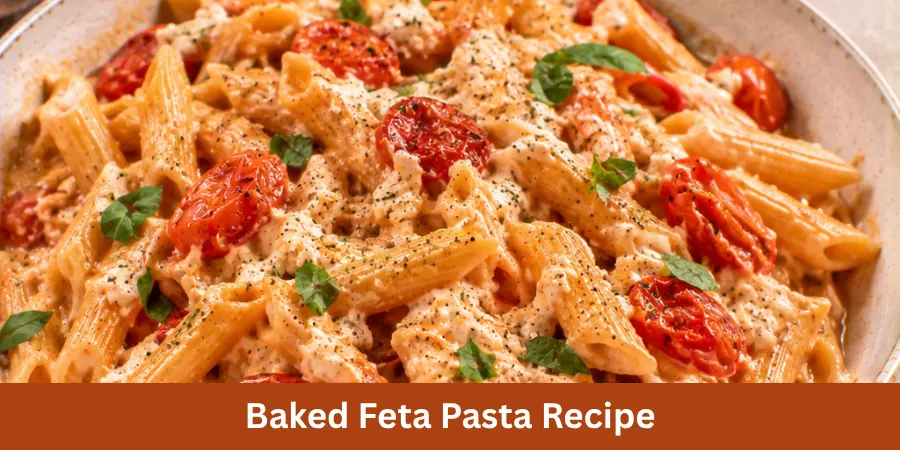
Baked Feta Pasta Recipe
What makes this dish special is how a few simple ingredients develop so much flavor during roasting. This baked feta pasta combines cherry tomatoes with a block of feta cheese and extra-virgin olive oil to create a creamy and flavorful dish.
As the tomatoes roast, they soften and burst, releasing their juices while the feta becomes creamy and rich. When these ingredients are mashed together, they form a savory sauce with a lightly tangy flavor and a smooth texture.
Baked Feta Pasta-The Short Answer
This is an easy weeknight pasta dish because the oven handles most of the roasting. The tomatoes, garlic, and feta develop deeper flavor as they cook, while al dente pasta gives the finished dish a satisfying bite.
Reserved pasta water can then be added gradually to loosen the sauce and help it coat the pasta evenly. I find this step especially useful because adding only as much water as needed keeps the sauce creamy rather than watery.
Fresh basil and other fresh herbs add a bright finish to the rich roasted mixture.
The combination of roasted tomatoes, feta, olive oil, garlic, herbs, and pasta creates a balanced Mediterranean-inspired dinner without complicated techniques.
The result is a creamy and flavorful pasta with softened tomatoes, tender garlic, and feta worked into the sauce rather than left as separate ingredients.
About This Recipe
I was a little behind on this TikTok food trend, but my brother kept telling me how delicious this dish was.
I usually do not follow every trendy recipe, and I do not even have a TikTok account, but I finally got around to making it myself.
The recipe is simple and comforting. Baked feta becomes creamy and rich as it roasts with the tomatoes, while the pasta cooks until al dente.
The warm pasta is then combined with the roasted feta and tomato mixture to create a creamy sauce that coats the pasta well.
After making it myself, I could see why this recipe became so popular.
Even though I am usually behind on food trends, this is one I can get behind.
The combination of roasted tomatoes, creamy feta, garlic, olive oil, and herbs creates a simple pasta dish that feels special while still being easy to prepare.
Why You’ll Love This Feta Pasta
This recipe uses simple ingredients to create big flavor with very little work.
Sweet roasted tomatoes, creamy feta, garlic, olive oil, and fresh basil come together to make a rich sauce.
As the tomatoes roast, they soften and release their juices while the feta becomes soft enough to mash into a luscious sauce.
The result is creamy and comforting without feeling too heavy, while the fresh herbs keep the flavor bright and fresh.
Giving the tomatoes enough time to roast helps develop deeper flavor with minimal effort.
The maximum reward comes from how easy the cooking process is.
The tomatoes, vegetables, garlic, olive oil, and feta roast in one dish, while you cook the pasta separately.
This keeps the process simple and means very little cleanup, making it a practical easy weeknight meal for busy days.
It is a nourishing and satisfying option that fits easily into everyday cooking and can become a regular part of your meal rotation.
You can also make your own version with greens, roasted vegetables, chili flakes, or your favorite herbs.
This flexible formula allows for endless variations while keeping the roasted tomato and feta base at the center.
It is an easy way to adapt the dish to what you already have in the kitchen without losing the qualities that make it so enjoyable.
Ingredients Needed
20 ounces cherry tomatoes or grape tomatoes
1 block sheep’s milk feta cheese (8 oz / about 227 g)
⅓ cup extra-virgin olive oil (about 80 ml)
1 medium red bell pepper (about 150 g), cut into pieces
⅓ cup pitted Kalamata olives (about 50 g)
6 medium garlic cloves, peeled
½ teaspoon fine salt
¼ teaspoon freshly ground black pepper
¼ teaspoon crushed red pepper flakes
2 fresh rosemary sprigs
4 fresh thyme sprigs
10 ounces dry pasta
½ cup reserved pasta water (about 120 ml)
1 tablespoon red wine vinegar (15 ml)
¼ cup fresh basil (about 12 g)
2 tablespoons fresh parsley (about 8 g)
Ingredients Notes
For this recipe, use cherry tomatoes or grape tomatoes because their small size allows them to roast evenly and release their natural juices as they burst.
The tomatoes create the liquid base for the sauce and also give the finished pasta a bright flavor and appealing presentation.
For the cheese, use a block of feta rather than crumbled feta.
A whole block holds its structure better during baking and develops a creamy texture when mashed with the roasted tomatoes.
Sheep’s milk feta is preferred for this recipe because it creates a rich and savory sauce.
For the pasta, choose a short shape that can hold the sauce well.
Fusilli, rotini, penne, cavatappi, and campanelle all work well for this style.
Short tubular or craggy pasta shapes are especially useful because the sauce clings to their surface.
The base recipe uses 10 ounces of dry pasta.
Gluten-free pasta can also be used when needed, with the cooking time adjusted according to the package directions.
Use ⅓ cup extra-virgin olive oil, or about 80 ml, for roasting the vegetables and helping form the sauce.
Season the base with ½ teaspoon fine salt, ¼ teaspoon freshly ground black pepper, and ¼ teaspoon crushed red pepper flakes.
The recipe uses 6 medium peeled garlic cloves, which roast with the vegetables and become soft and mellow.
This creates noticeable garlic flavor without the sharpness of raw garlic.
For the herbs, use 2 fresh rosemary sprigs and 4 fresh thyme sprigs during roasting.
They provide an earthy herbal layer that works well with the roasted tomatoes and feta.
Add ¼ cup fresh basil, about 12 grams, and 2 tablespoons fresh parsley, about 8 grams, near the end.
Keeping these fresh herbs out of the long baking stage helps preserve their brighter aroma and flavor.
The roasted vegetable base uses 20 ounces of cherry or grape tomatoes, 1 medium red bell pepper, about 150 grams, and ⅓ cup pitted Kalamata olives, about 50 grams.
Cut the pepper into pieces before roasting.
It adds natural sweetness to the tomato and feta base, while the olives contribute a concentrated briny flavor and additional complexity.
Since both feta and Kalamata olives already contribute salt, additional seasoning should be added carefully.
Finish the sauce with 1 tablespoon red wine vinegar, or 15 ml.
Its acidity adds a tangy note and balances the richness of the feta and olive oil.
The recipe also calls for ½ cup reserved pasta water, or 120 ml, but this is the maximum amount available rather than an amount that must all be added.
Start with a small amount and gradually add more while tossing until the sauce becomes creamy, glossy, and able to coat the pasta without becoming watery.
How to Make Baked Feta Pasta
Start by choosing an oven-safe baking dish that gives the ingredients enough room to roast without being unnecessarily spread out.
Preheat the oven to 400°F.
Add the grape tomatoes or cherry tomatoes, bell peppers, garlic cloves, olives, red pepper flakes, black pepper, and salt to the baking dish.
Drizzle with olive oil and toss everything together until well combined.
Place the block of feta cheese in the center, surrounded by the vegetables, and turn it once to lightly coat the outside with oil.
Add the fresh herb sprigs between the vegetables and keep the dish uncovered.
Bake in the preheated oven for 30 minutes.
The tomatoes should be softened with some beginning to burst, while the garlic and bell pepper become tender and the feta softens.
If the tomatoes still look mostly firm at this point, give the dish an additional 5 minutes in the oven before moving forward, up to a maximum total of 35 minutes.
For a deeper roasted finish, move the oven rack to the upper 1/3 and increase the oven temperature to 450°F for about 5 minutes.
The vegetables should develop a flavorful light char and the feta can become lightly golden around the edges.
Avoid letting the feta become dark or burned.
Time the pasta so it finishes cooking close to when the vegetables come out of the oven.
Start boiling a pot of salted water during the final 4–5 minutes of that first bake, then add the pasta and cook it according to the package instructions until al dente.
This keeps the pasta from sitting around too long after draining, which can make it stick together or cool down before it meets the sauce.
Before draining, reserve ½ cup of the cooking liquid.
Remove the fresh herb sprigs from the baking dish.
Use a wooden spoon to gently mash the roasted garlic, tomatoes, bell peppers, and feta together with the oil.
The mixture does not need to become completely smooth. Small pieces of tomato and creamy feta streaks can remain.
Stir in 1 tablespoon red wine vinegar, tasting as you go.
If the tomatoes already taste quite acidic, start with about 2 teaspoons and add the rest only if needed.
This step balances the richness of the feta and olive oil before the pasta is added.
Add the drained pasta directly to the roasted mixture and toss for about 30–45 seconds so the sauce coats it evenly.
Add the reserved pasta water gradually, starting with a few tablespoons, and add more only if needed to reach the desired consistency.
This creates a creamy sauce without leaving watery liquid at the bottom of the dish.
Finish with fresh basil and parsley, gently folding them through the warm pasta.
Taste and adjust the seasoning with a small amount of black pepper or red pepper flakes if needed.
Be careful with additional salt because both feta and olives already contribute saltiness.
If using the spinach variation, add spinach to the pasta water shortly before draining so it can wilt without requiring another cooking step.
Garnish with fresh herbs and serve warm with a simple salad or crusty bread.
Easy Variations to Try
The basic recipe is easy to adapt with different pasta shapes or vegetables while keeping the roasted tomato and feta base at the center.
Campanelle, rigatoni, rotini, penne, and cavatappi all work well because their shapes can hold the creamy sauce.
You can also add spinach, broccoli, or mushrooms for a different texture and flavor.
Keep the cooking time in mind when adding vegetables so they become tender without overcooking.
For a heartier meal, add protein such as cooked meat, chicken, ground beef, Italian sausage, or ground turkey.
These additions can make the dish more filling while keeping the roasted tomato and feta sauce as the main flavor.
If you prefer a different vegetable combination, the recipe can also be adapted with zucchini.
Asparagus and frozen artichoke hearts can provide more variety and additional texture.
For a fresh finish, lemon zest can be added at the end to bring a light citrus aroma to the rich sauce.
The recipe can also be made with zucchini noodles or spaghetti squash when you want an alternative to traditional pasta.
These changes let you adjust the texture and ingredients while keeping the creamy roasted feta character of the dish.
Storing Leftover Feta Pasta
For the best taste and texture, I prefer this pasta on the day it is made.
If you are picky about texture, keep in mind that the pasta can soften as it sits because it is coated in sauce.
Even so, the flavor remains great, so I usually save any leftovers rather than waste them.
Once you are done serving, let the pasta cool completely, then transfer it to an airtight container and refrigerate it for up to 4 days.
For longer storage, the pasta can be frozen for up to 2 months.
Freezing it in individual portions makes quick meals easier later.
When ready to use, thaw a portion overnight in the refrigerator.
You can then warm it up in a pan with a splash of water or reheat it in the microwave.
Adding a little water while reheating helps bring back some moisture as the pasta warms.
Expert Tips
When making baked feta pasta, fresh ingredients make a noticeable difference because the recipe uses minimal ingredients.
Use fresh cherry tomatoes instead of canned diced tomatoes, along with fresh basil and fresh minced garlic.
Extra-virgin olive oil forms an important part of the sauce, so do not cut back too much if you want a rich and flavorful result.
For the feta, use a whole block rather than crumbled feta because the powdery coating on crumbled cheese does not roast as well.
A block of sheep’s milk feta gives a creamier texture, while cow’s milk feta can be more crumbly and drier.
Low-fat feta is also less suitable because it may not melt as smoothly.
For saucy tomatoes, crowd the baking dish rather than spreading them too far apart.
Keep them mostly in a single layer while leaving enough room for proper roasting.
A 9×13-inch baking dish works well for this recipe.
If you want blistered tomatoes, increase the heat to 450°F during the last 5 minutes.
You can also use the broil setting for 3–5 minutes, but watch the feta closely so it does not become too dark.
Short pasta, tubular pasta, and craggy pasta work especially well because their shapes are good at clinging to the sauce.
Cook the dry pasta until al dente for the best texture, then add the warm pasta to the feta and tomatoes while the sauce is still warm.
This also helps prevent the pasta from sticking together.
Save ½ cup pasta water before draining the pasta so you have more sauce flexibility if needed.
Add it gradually rather than all at once.
A small amount can loosen the sauce and make it smooth and creamy while helping the pasta soak up the sauce as it softens.
The roasted tomatoes provide fresh flavor, light sweetness, and a tangy note that balances the feta.
High-quality extra-virgin olive oil adds a rich and earthy flavor because it is a major component of the sauce.
The goal is a creamy texture with enough sauce to coat the pasta without leaving watery liquid at the bottom of the baking dish.
Notes
I usually let leftovers cool before transferring them to an airtight container and storing them in the fridge.
They can be enjoyed warmed up or chilled and should keep well for up to 4 days.
For longer storage, the pasta can be frozen for up to 2 months, although the texture may be softer after thawing.
For best results, I prefer cavatappi pasta because its short tubular shape and slightly craggy surface do a good job of holding onto the sauce and flavor.
Gluten-free pasta is also a practical substitute.
If you do not have cherry tomatoes, regular whole tomatoes or canned diced tomatoes can work, although cherry tomatoes provide the best flavor for this dish.
For the feta, quality can make a noticeable difference in the final texture and flavor.
Sheep’s milk feta is usually creamier, while cow’s milk feta can be more crumbly and drier.
Both can be used, so the choice mainly depends on the texture you prefer.
These simple adjustments still leave you with a delicious pasta while giving you some flexibility with the ingredients.
Nutrition Facts
This Baked Feta Pasta recipe makes 5 servings, with each serving equal to 1/5 of the complete recipe.
One serving contains:
508 kcal
52.4 g carbohydrates
15.6 g protein
26.5 g total fat
4.3 g saturated fat
4.3 g fiber
5.8 g total sugar
747 mg sodium
These Nutrition Facts are calculated from the exact ingredient quantities used in the recipe.
The actual amounts can vary slightly depending on the pasta brand, feta variety, olive brand, and other ingredient labels.
For this reason, the listed values should be treated as an estimate rather than an exact measurement for every batch.
Frequently Asked Questions
Can I use crumbled feta cheese for baked feta pasta?
If you only have crumbled feta cheese, you can still make the pasta, but the texture will not be quite the same as using a block.
For the creamy roasted texture this recipe is designed for, keep the feta together in the middle of the baking dish instead of crumbling it before baking.
This helps it soften evenly and develop a melty consistency that blends easily with the roasted tomatoes and olive oil.
Can I use another type of cheese instead of feta?
You can also make this with goat cheese or ricotta if you want to try a different cheese.
These options can give the sauce a creamy texture, but the result will differ from the roasted feta version. For the recipe’s intended texture, a block of feta works best.
What pasta shape works best for baked feta pasta?
Short shapes such as penne, fusilli, rotini, cavatappi, or campanelle work especially well.
A pasta shape with curves or edges gives the sauce more surface area to cling to, helping each bite carry some of the creamy feta mixture.
How long does baked feta pasta last in the fridge?
This pasta is best served warm while the sauce is fresh. If you have leftovers, let them cool and transfer them to an airtight container.
Store them in the fridge for up to 4 days and reheat gently when ready to enjoy them again.