Pizza Sauce Recipe: Homemade Sauce for Canning
A good pizza starts with a flavorful sauce, and this Easy Homemade Pizza Sauce Recipe creates a reliable base without much effort.
Growing up around Chicago pizza, I learned how much the sauce can affect the entire pie.
A pizza needs a bold and flavorful sauce that supports the toppings rather than getting lost underneath them.
This homemade pizza sauce uses a no-cook method, making it a quick option when you want to prepare pizza from scratch.
It takes about 5 to 10 minutes of hands-on preparation and does not require cooking on the stove.
Homemade Pizza Sauce Recipe for Canning-The Short Answer
The combination of tomatoes, tomato paste, garlic, olive oil, and dried herbs creates a balanced flavor with a savory depth.
After blending, the sauce should rest for at least 20 to 30 minutes.
This resting time allows the garlic and herbs to blend with the tomatoes and helps the flavors develop before spreading it over pizza dough.
For a stronger and more settled flavor, the sauce can also rest longer before use. This recipe is practical because it makes a larger batch that can be stored for future pizza nights.
The finished sauce yields about 650 ml, or approximately 8 portions, with each ⅓-cup portion suitable for a 10-inch pizza.
I like this approach because a reliable pizzeria-style pizza base does not require complicated preparation or fancy ingredients.
Simple ingredients, the right balance of seasoning, and the correct consistency are enough to create a homemade sauce that works well with different pizza toppings.
Why You’ll Love This Recipe
This pizza sauce is quick to prepare, making it a practical choice when you want homemade pizza without an extra trip to the store.
The combination of Italian seasoning, tomato paste, and sugar creates a balanced tomato flavor while keeping the recipe simple.
Most ingredients are pantry staples, so they are easy to keep available. There is minimal prep work because no chopping or cooking is required.
Once the tomatoes are drained, the ingredients are added to a food processor or blender and blended together.
The sauce only needs a short rest afterward so the flavors can come together before being spread over pizza dough.
Ingredients Needed
1 can whole peeled tomatoes in tomato juice (28-ounce / 794 g)
6 ounces (170 g) tomato paste
2 tablespoons (30 ml) extra-virgin olive oil
2 cloves fresh garlic, peeled
2 teaspoons dried oregano
1 teaspoon dried basil
1 teaspoon Italian seasoning
1 teaspoon fine sea salt
½ teaspoon freshly ground black pepper
2 teaspoons granulated sugar
¼ teaspoon crushed red pepper flakes (optional)
Ingredients Notes
Whole peeled tomatoes create the main tomato base of this pizza sauce. Use 1 can of plain whole peeled tomatoes in tomato juice, weighing 28 ounces (794 g) before draining.
Choose unseasoned tomatoes instead of seasoned varieties because extra salt or added flavors can affect the final seasoning balance.
Drain the tomatoes before blending, leaving approximately 500 g of drained tomatoes for the sauce. The drained weight usually falls between 450 and 520 g depending on the brand.
Tomato paste provides thickness and concentrated tomato flavor. Use 6 ounces (170 g) tomato paste. If your tomato paste comes in a different size, weigh out 170 g.
It gives the sauce enough body to spread easily over pizza dough while helping prevent the crust from becoming soggy.
Keeping the tomato paste amount consistent helps maintain the thick pizza-friendly texture.
It also helps to keep 1 extra tablespoon (about 16 g) of tomato paste and a little plain tomato puree on hand in case you need to adjust the consistency or seasoning later.
Extra-virgin olive oil adds richness and creates a smoother mouthfeel. Use 2 tablespoons (30 ml) extra-virgin olive oil.
It softens the sharpness of the tomatoes and helps carry the flavors of the garlic and dried herbs throughout the sauce.
Fresh garlic builds the savory flavor of the sauce. Use 2 peeled garlic cloves.
The garlic adds depth without overpowering the tomato base, especially after the sauce rests and the flavors blend together.
The dried herbs create the classic pizza sauce flavor. Use 2 teaspoons dried oregano, 1 teaspoon dried basil, and 1 teaspoon Italian seasoning.
This combination adds a savory herbal flavor while allowing the tomatoes to remain the main flavor.
Fine sea salt, black pepper, and granulated sugar balance the tomato flavor.
Use 1 teaspoon fine sea salt, ½ teaspoon freshly ground black pepper, and 2 teaspoons granulated sugar. The sugar helps balance the natural acidity of the tomatoes rather than making the sauce sweet.
Crushed red pepper flakes are optional and add mild heat. Use ¼ teaspoon if you want a slightly spicy flavor.
You can leave them out completely for a milder pizza sauce.
The combination of tomatoes, tomato paste, olive oil, garlic, herbs, and seasonings creates a thick sauce that blends smoothly while maintaining a tomato-forward flavor.
The ingredients are kept simple so the sauce works well with different pizza toppings without overpowering them.
Equipment Needed
Have these tools ready before making the pizza sauce:
Can opener
Colander or strainer
Bowl to catch and save tomato juice
Digital kitchen scale for weighing drained tomatoes
Measuring spoons and measuring cup
Food processor, blender, or immersion blender
Airtight container or glass jar for resting and storing the sauce
Easy Adjustments for Pizza Sauce
A few simple adjustments can be made while keeping the main character of this pizza sauce the same.
The tomato paste should remain part of the recipe because it provides thickness and helps create a spreadable sauce that works well on pizza dough.
The herbs can be adjusted based on your preferred flavor.
Oregano and Italian seasoning can be increased or reduced, but keeping the herbs in dried form helps maintain a consistent flavor.
If you prefer a milder sauce, start with a smaller amount and adjust gradually after tasting.
Seasoning adjustments are best made after the sauce has rested.
The recipe uses fresh garlic, sea salt, and granulated sugar as the main seasoning components.
The sugar balances the natural acidity of the tomatoes, enhances their flavor, and reduces sharpness without making the sauce taste sweet.
Make small adjustments instead of changing several ingredients at once.
This helps maintain the balance between tomato flavor, herbs, seasoning, and consistency.
Why This Combination Works
Whole peeled tomatoes provide the main tomato flavor and natural moisture needed for blending.
Draining the tomatoes helps prevent the sauce from becoming watery, while saving the tomato juice gives you a way to loosen the sauce later if needed.
Tomato paste concentrates the tomato flavor and creates a thicker structure than a traditional tomato sauce.
It helps the sauce stay spreadable on pizza dough without becoming too runny.
Extra-virgin olive oil adds richness without making the sauce oily.
Fresh garlic provides a savory flavor, while the dried herbs create layers of seasoning without allowing one herb to overpower the tomatoes.
Salt, sugar, and black pepper work together to balance the overall flavor.
The result is a thick, smooth pizza sauce with a tomato-forward taste that complements different pizza toppings.
How To Make Pizza Sauce
Start by preparing the tomatoes.
Open the can of whole peeled tomatoes and pour them into a colander placed over a bowl.
Let the tomatoes drain for 1–2 minutes without pressing them. Save the tomato juice in the bowl because it can be used later to adjust the sauce consistency.
Weigh the drained tomatoes. The goal is to have about 500 g of drained tomatoes for the recipe.
If you notice any hard core or stem end on the tomatoes, remove it. Peel the garlic cloves before blending.
Add the drained whole tomatoes and tomato paste to a food processor or blender.
Add the extra-virgin olive oil, fresh garlic, dried oregano, dried basil, Italian seasoning, fine sea salt, black pepper, granulated sugar, and crushed red pepper flakes if using.
Blend the mixture for about 30–60 seconds until the ingredients are smooth and evenly combined.
For a slightly rustic texture, use short pulses and leave a few small tomato pieces instead of blending until completely smooth.
Avoid unnecessary over-processing because the goal is a smooth, spreadable sauce rather than a mixture filled with air.
Once blended, transfer the sauce to an airtight container. Let it rest in the refrigerator for at least 20–30 minutes.
This resting time allows the dried herbs and fresh garlic to blend with the tomatoes and gives the flavor more time to develop.
For a stronger and more settled flavor, the sauce can rest overnight. After resting, let the sauce sit at room temperature for a few minutes, then taste it and adjust the seasoning if needed.
If the sauce is too acidic, add ¼ teaspoon of sugar at a time and taste again.
If it is under-seasoned, add a small pinch of salt.
If the sauce is too thick, gradually add the reserved tomato juice 1 tablespoon at a time.
If the sauce is too thin, add 1 tablespoon of extra tomato paste, blend briefly, and check the consistency again.
Make small adjustments because canned tomato acidity and salt levels can vary between brands.
When the consistency is right, spread the sauce over stretched pizza dough in an even layer.
Leave a small border around the edge for the crust.
Use ⅓ cup (80 ml) for a 10-inch pizza or up to ½ cup (120 ml) for a 12-inch pizza. Avoid using too much sauce because excess moisture can make the pizza base soggy.
The sauce does not need to be cooked separately before using. It will cook naturally while the pizza bakes.
If preparing the sauce ahead of time, keep it refrigerated in an airtight container until ready to use.
Consistency Check
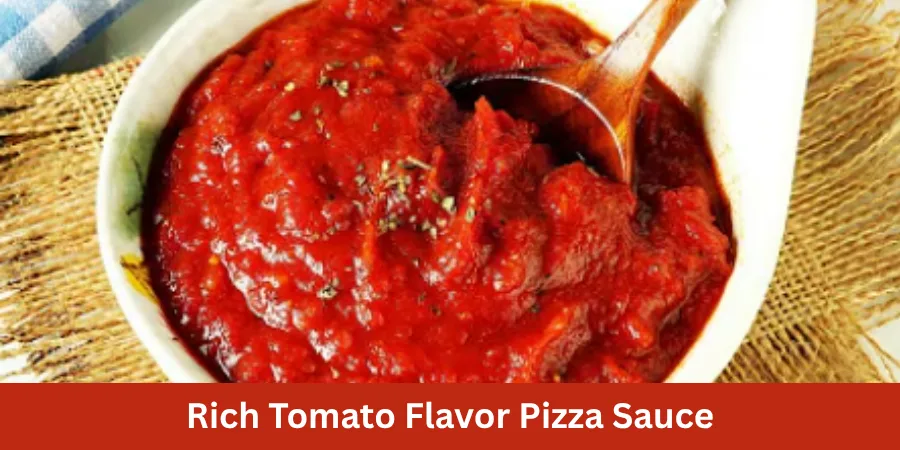
The finished pizza sauce should be thick enough to stay in place, smooth enough to spread easily, and moist without becoming watery.
It should feel rich but never oily. Use the spoon test to check the consistency. Drag a spoon through the sauce and observe the trail it leaves behind.
A properly thick sauce should hold a visible path for a moment before slowly coming back together.
If the trail closes immediately and the sauce spreads like a thin tomato liquid, it is too loose for pizza.
If the spoon leaves a stiff trench that does not move, the sauce is too thick and needs a small amount of reserved tomato juice.
Troubleshooting
Sauce is too thin
The usual cause is too much tomato liquid. Add 1 tablespoon (about 16 g) of tomato paste, blend briefly, and check the consistency before adding more.
Sauce is too thick
Add reserved tomato juice 1 tablespoon (15 ml) at a time. Blend briefly after each addition until the sauce spreads easily while still holding its shape.
Sauce is too acidic
Add ¼ teaspoon of sugar at a time. Taste after each addition because the goal is to balance acidity, not make the sauce sweet.
Sauce is too salty
Do not add more seasoning. Instead, dilute the batch with a small amount of plain unsalted tomato puree or extra drained tomato.
Sauce is too herby
Add a small amount of plain tomato and blend again. Avoid adding only tomato paste because it can make the sauce too thick.
Sauce tastes too mild
Check the salt level first because under-seasoned sauce often tastes flat. If the salt level is correct, add a little more oregano or garlic instead of increasing every seasoning at once.
Common Mistakes to Avoid
Avoid these common mistakes when making homemade pizza sauce:
Leaving too much liquid from canned tomatoes in the sauce
Throwing away the tomato juice instead of saving it
Reducing the amount of tomato paste
Adding too much olive oil
Increasing every herb at the same time
Adding too much sugar
Tasting only immediately after blending instead of after resting
Using more sauce than the pizza needs
Skipping the final taste adjustment
Cooking the sauce separately when following the no-cook method
Storage Life
For the best texture, store the pizza sauce in an airtight container in the refrigerator.
A glass jar with a lid works well for storing the sauce. Keep leftover sauce refrigerated for up to 5 days.
Chilling can make the sauce thicker, so allow it to return to room temperature before using.
If needed, gently warm it in the microwave to make spreading it over pizza dough easier.
For longer storage, freeze the sauce in an airtight container or jar for up to 3 months. Leave a little space at the top because the sauce expands as it freezes.
A useful method is to divide the sauce into ⅓-cup (80 ml) portions. Each portion is suitable for one 10-inch pizza.
When needed, transfer a frozen portion to the refrigerator and let it thaw overnight. Stir well before using.
This helps avoid repeatedly thawing the entire batch and keeps individual portions ready.
Flavor Variations
Change one ingredient at a time while keeping the rest of the recipe the same.
Spicy
Increase crushed red pepper flakes from ¼ teaspoon to ½ teaspoon.
Garlic-Forward
Increase the garlic from 2 cloves to 4 cloves.
Herb-Focused
Increase dried oregano from 2 teaspoons to 1 tablespoon.
Keep the dried basil and Italian seasoning amounts the same.
Mild
Leave out the crushed red pepper flakes completely.
Serving Ideas
Use this pizza sauce on different types of pizza, including:
Cheese pizza
Pepperoni pizza
Vegetable pizza
Chicken pizza
It also works well inside calzones and stromboli. The sauce can be served as a dip for breadsticks and mozzarella sticks.
Nutrition Insight
A serving size of pizza sauce is ⅓ cup (80 ml).
Each serving provides approximately:
70 kcal
7.5 g carbohydrates
1.5 g protein
3.5 g fat
2 g fiber
5.5 g sugar
375 mg sodium
These nutrition values are approximate estimates.
The final amounts can vary depending on the brands of canned tomatoes and tomato paste used.
The salt level of the ingredients can also affect the final sodium content.
Frequently Asked Questions
How Many 10-Inch Pizzas Does This Pizza Sauce Make?
This pizza sauce recipe makes enough for approximately eight 10-inch pizzas when using the recommended ⅓ cup (80 ml) portion.
For a 12-inch pizza, use up to ½ cup (120 ml), which gives around five pizzas from one batch.
What Happens If I Double or Triple the Pizza Sauce Recipe?
This recipe can be doubled or tripled when making pizza for a larger group. A larger batch should keep a similar texture and flavor when prepared in bigger quantities.
A double batch is roughly 1.4 kg of mixture, which may not fit into one food processor bowl. Blend it in two or three rounds and combine everything in a large bowl.
Taste after combining and adjust gradually if needed.
How Does Pizza Sauce Differ From Spaghetti Sauce?
The main differences are texture, moisture, and flavor. Pizza sauce is thicker because tomato paste creates a firmer base that spreads easily over pizza dough.
It uses a concentrated combination of tomatoes, tomato paste, herbs, and seasonings.
Pizza sauce usually stays uncooked and finishes cooking in the oven, while spaghetti sauce is generally simmered and has a looser texture with a deeper cooked flavor.
Does Homemade Pizza Sauce Need to Be Cooked?
No. This homemade pizza sauce is a no-cook sauce, so it does not need to be cooked before using.
The sauce can be spread directly over pizza dough and will cook naturally while the pizza bakes.
Is Ketchup a Good Substitute for Pizza Sauce?
Ketchup is not recommended as a substitute for this pizza sauce.
Ketchup contains vinegar and added sugar, creating a sweeter and tangier flavor that does not provide the same savory balance as this recipe.
The tomato paste and herbs in this sauce create a thicker and more pizza-friendly texture.
Should Tomatoes Be Drained Before Making Pizza Sauce?
Yes, tomatoes should be drained before making this pizza sauce. Let them drain in a colander for 1–2 minutes without pressing them.
Save the extra tomato juice because it can be used later to adjust the sauce consistency. After draining, weigh the tomatoes before blending.
This helps create a thick sauce that can be adjusted without becoming watery.